Nuwejaars River Nature Reserve
Annual Report 2024/25
Our vision
To protect and manage the Consolidated Core and Buffer Area of the NWSMA and its interface into one functioning ecosystem, forming an innovative system for conservation on private land, while providing environmental education, and sustainable socio-economic activity and tourism opportunities.
What is the Nuwejaars Wetlands Special Management Area? And why does this vast area need to be protected? Here’s the answer:
Where are the Nuwejaars wetlands? And which tributaries and lakes connect into this system? More here:
Our structure
The Nuwejaars River Nature Reserve (NRNR) is the Non-Profit Company (2003/020520/08) and Public Benefit Organisation (930016797) that implements the conservation work on the Nuwejaars Wetlands Special Management Area, or NWSMA. This is a 47,000-hectare area, of which around half is natural land consisting of threatened fynbos, wetlands and rivers – all home to very special wildlife.
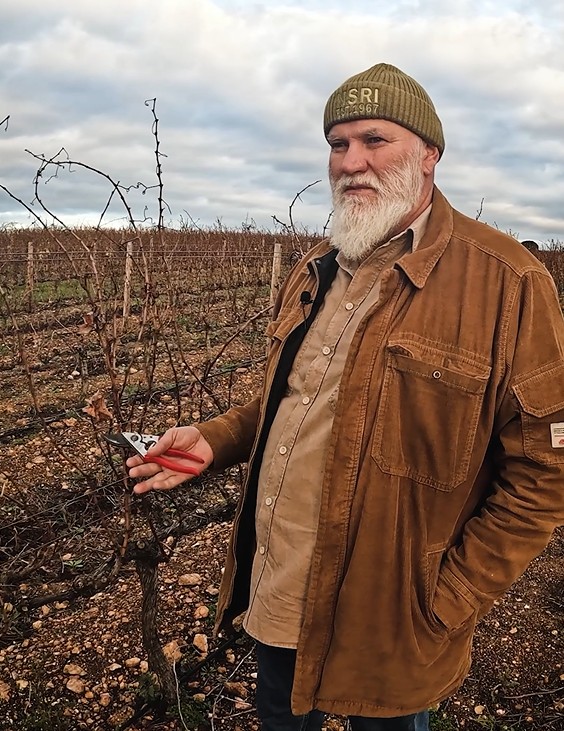
FROM THE CHAIRPERSON, DIRK HUMAN
We’ve helped shape a new landscape
Over the past few months, I’ve taken a moment here and there to page through the documents that shaped the early days of the Nuwejaars Wetlands Special Management Area – plans and notes from as far back as 2004. Those early conversations were rooted in something that, at the time, felt both daring and necessary. Back then, we spoke about how we could ‘inkamp’ the intensive agricultural areas (we used those exact words – essentially meaning that we wanted to fence in the productive lands).
In contrast, we highlighted the need to open up and connect the natural areas across this 47 000-hectare area.
READ MORE
We also made a commitment to each other: to rather than recreate a landscape of 100 years ago; ask what we want our landscape to look like 100 years from now. And to then build plans to make that a reality. This vision was to create corridors for wildlife and to allow water to flow again as it should through the landscape.
At the time, this thinking was novel. It went against the grain of how many of us – myself included – had been taught. And yet, it was this thinking around a table with farmers, government departments and conservationists in 2004 that laid the foundation for what would become a new conservation model at the time. The Nuwejaars Wetlands SMA was built on a belief: that private landowners which included the town of Elim, working together with conservationists, donors and our partners in government, could achieve what a state-run conservation programme might – and do so more cost-effectively, with agility, guided by local insight from the ground up.
Looking back today, I can say with pride that we have done just that
We’ve helped shape a new landscape – where animals that became locally extinct here once again roam, where rivers flow as they should, cleared of the threat of invasive alien plants, and where wetlands that were once degraded are now alive with bird calls and teeming with life.
None of this happened overnight. It took commitment from the founding members (there were 23 of us who signed the Memorandum of Support in 2004), and each person who joined us on this journey since. And it took the courage to try something new and unproven. I’m incredibly proud to have played a part in that, alongside so many passionate and committed people.
Over the years, we’ve demonstrated that we can stretch every rand to its fullest. We’ve delivered results that inspire confidence in those who support us – and we’ve shown that we can be trusted, with clean audits year after year. That trust is invaluable. It’s why donors continue to back the work of the Nuwejaars River Nature Reserve, our non-profit company that implements conservation on the Nuwejaars Wetlands SMA. To each and every donor, both past and present, I want to say: thank you. Your support has not only kept this dream alive – it has helped it grow into something far greater than we imagined in 2004.
And we’re not done yet. If anything, these years have shown us what’s possible, and what still lies ahead. We’ve laid the foundation to continue this work, to build on what’s been achieved and to inspire others to follow a similar path.
To everyone who’s been part of the Nuwejaars Wetlands SMA story – whether you joined us in the very beginning or just recently – thank you. It’s been a privilege to walk this path with you.
Dirk Human
Chairman, Nuwejaars Wetlands SMA
FROM THE OPERATIONS MANAGER, ROSS KETTLES
Our conservation highlights over the past year
Objective 1
Protect the NWSMA forever through title deed restrictions
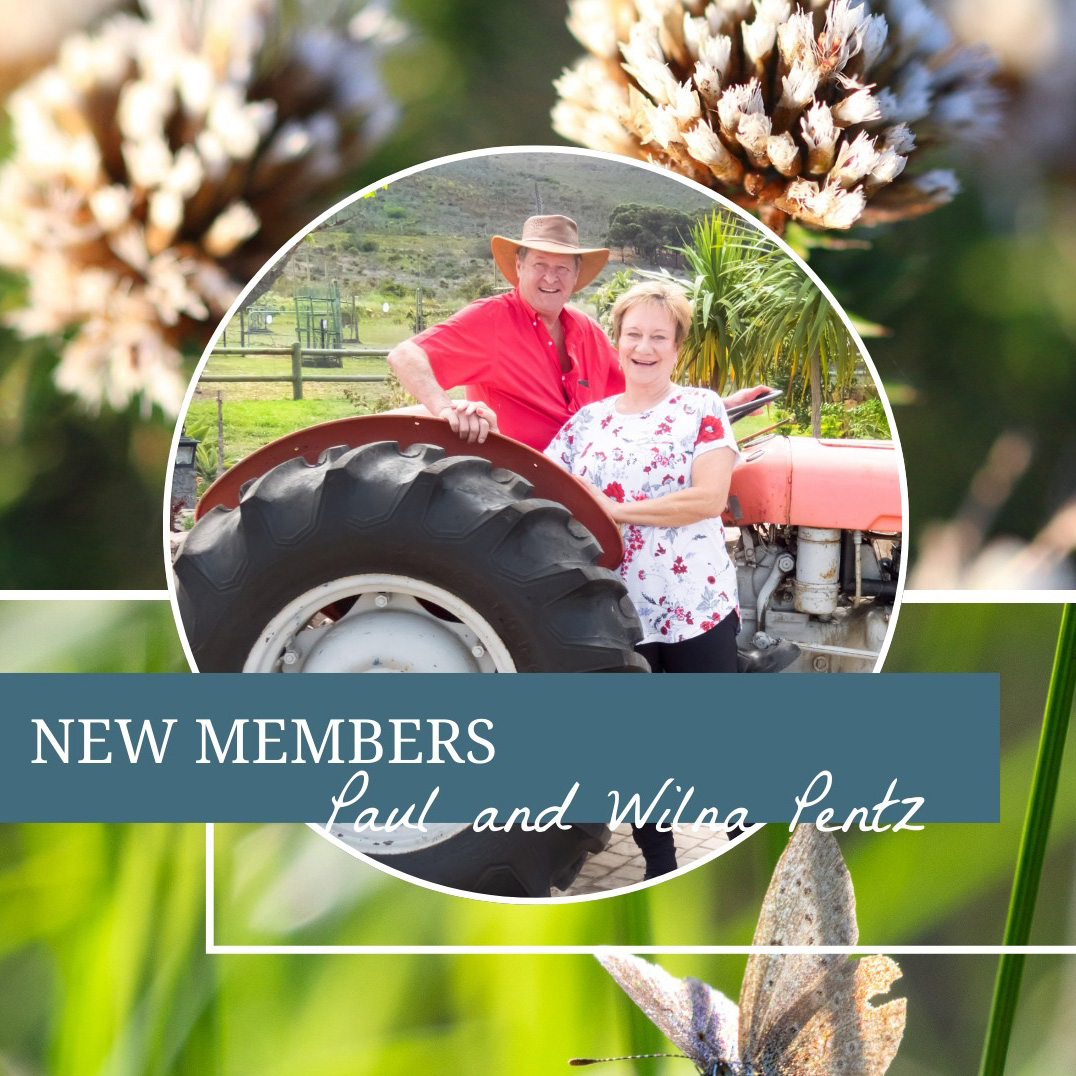
The NWSMA is expanding
During the past year, the Nuwejaars River Nature Reserve welcomed a new member to the family. Paul and Wilna Pentz brought 58 hectares of Endangered Overberg Sandstone Fynbos into the fold. And it’s not only about the plants; this mountain region is also an essential corridor for animals.
The property, outside of Bredasdorp, is now being protected in perpetuity, with title deed restrictions placed against the property for conservation.
Gaining international recognition
The NWSMA was recommended by the Western Cape Review Committee to receive OECM status. This stands for Other Effective Areas-Based Conservation Measures. These are areas that are managed to conserve biodiversity but are considered non-traditional conservation areas, in other words outside, they fall outside the formal protected areas. OECMs are vital if South Africa is to meet our 30×30 targets: protecting 30% of land and sea by 2030. In the past year, the NWSMA’s application advanced to national consideration, with the Department of Forestry, Fisheries and the Environment now driving the process.
Growing our core conservation footprint
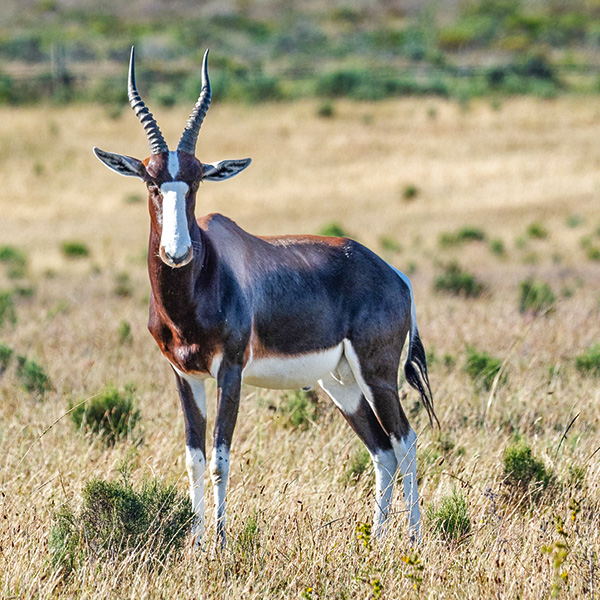
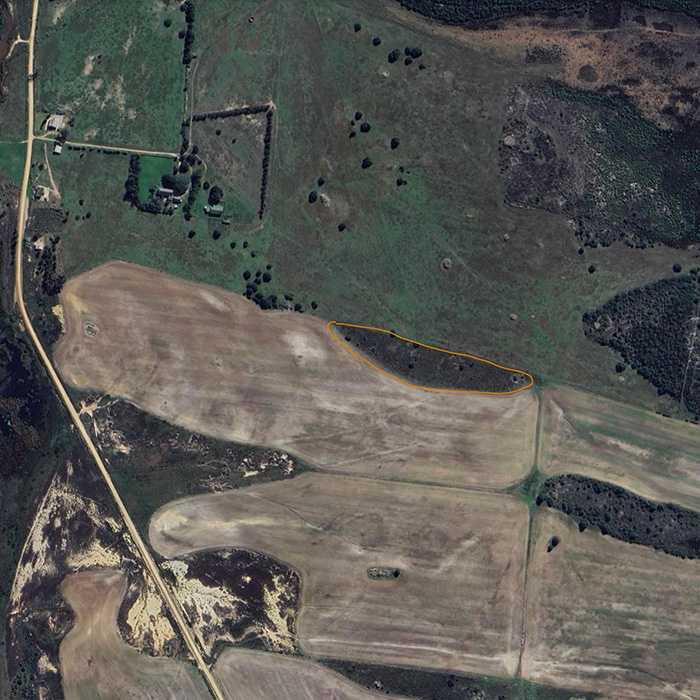
While growing the NWSMA’s borders holds major benefits for nature, we are particularly focused on growing the core conservation area within the NWSMA’s footprint. And we achieved that in the past year, with agricultural activities halted on a 70-hectare site, and with the land converted into a conservation camp which will now become home to Vulnerable bontebok.

Objective 2
Manage and improve ecological integrity of the NWSMA
The year in a nutshell:
Restoration on the NWSMA
alien invasive plant species identified
3 470
ha of invasive alien clearing
118
ha of wetland system burnt for restoration
168
sites visited for water quality testing
The year in a nutshell:
- 3 470 ha of invasive alien clearing
- 118 ha of wetland system burnt for restoration
- 168 sites visited for water quality testing
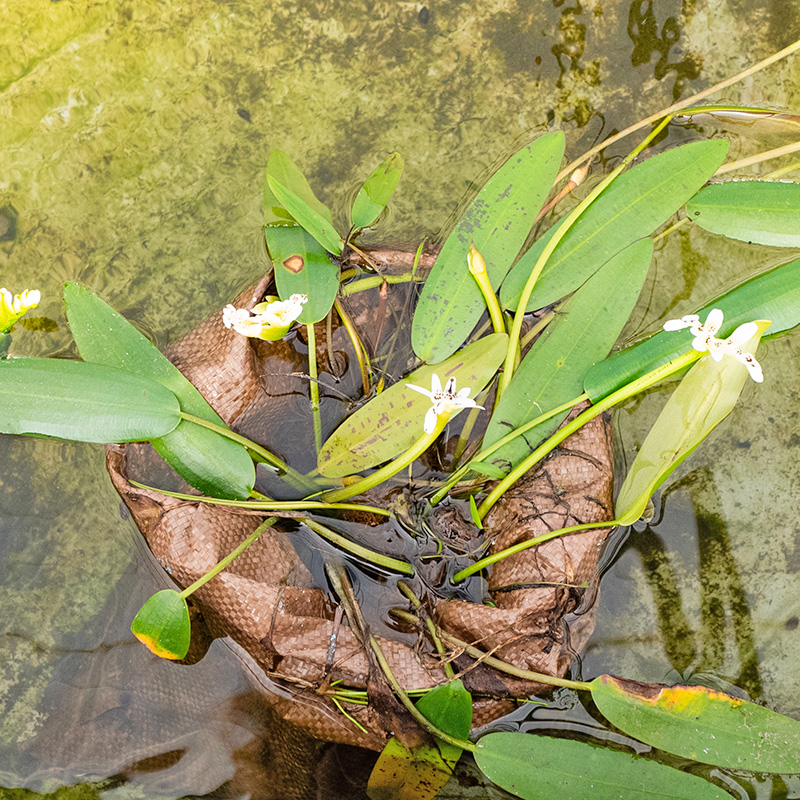
Wetlands restoration: Creating a home for birds
During the past financial year, we launched the next phase of our WWF South Africa-funded wetlands rehabilitation project, which will run until 2027. Over the next three years, our focus is on removing invasive alien species – especially in wetlands and along the riparian zones of the Nuwejaars River.
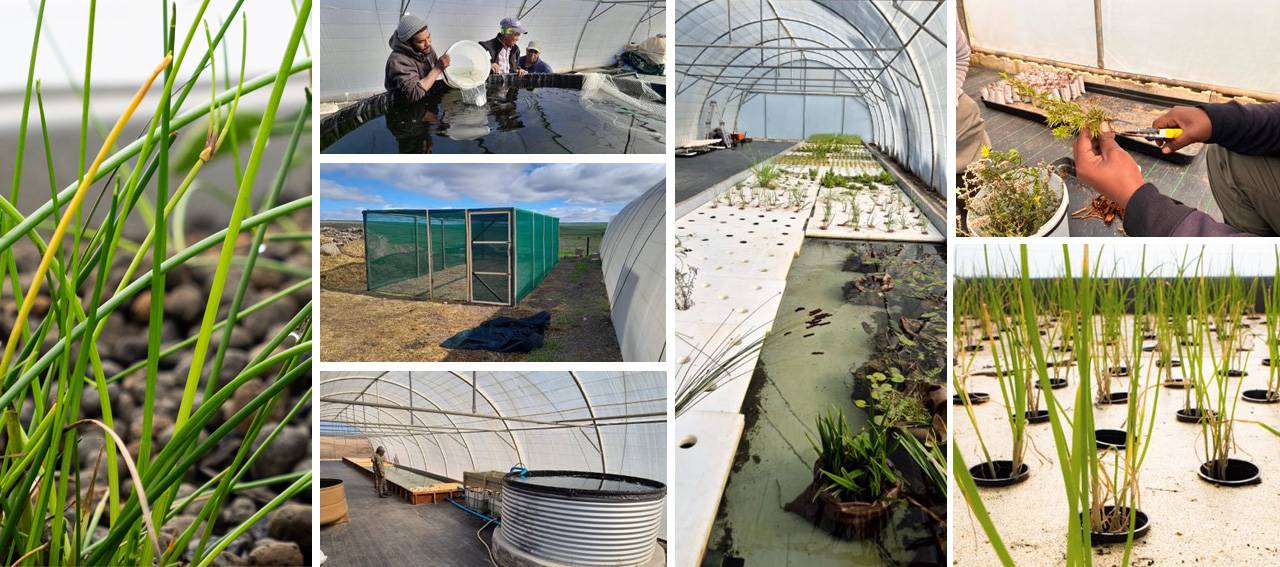
In some areas, the wetlands are so degraded that they can’t recover on their own. Here, we step in with active restoration – growing wetland plants until they’re strong enough to perform their natural role. That’s why we’ve established a dedicated wetlands nursery and developed a sustainable aquaponics system, both designed to restore the ecological function of one of South Africa’s most unique wetland regions. Read more about our nursery and aquaponics system here.
This work also supports our vision of creating green corridors – safe pathways where wildlife, from the smallest creatures to the largest mammals, can move freely across the landscape, with enough food and breeding spaces to thrive. Our restoration work is co-funded by the Overberg District Municipality.
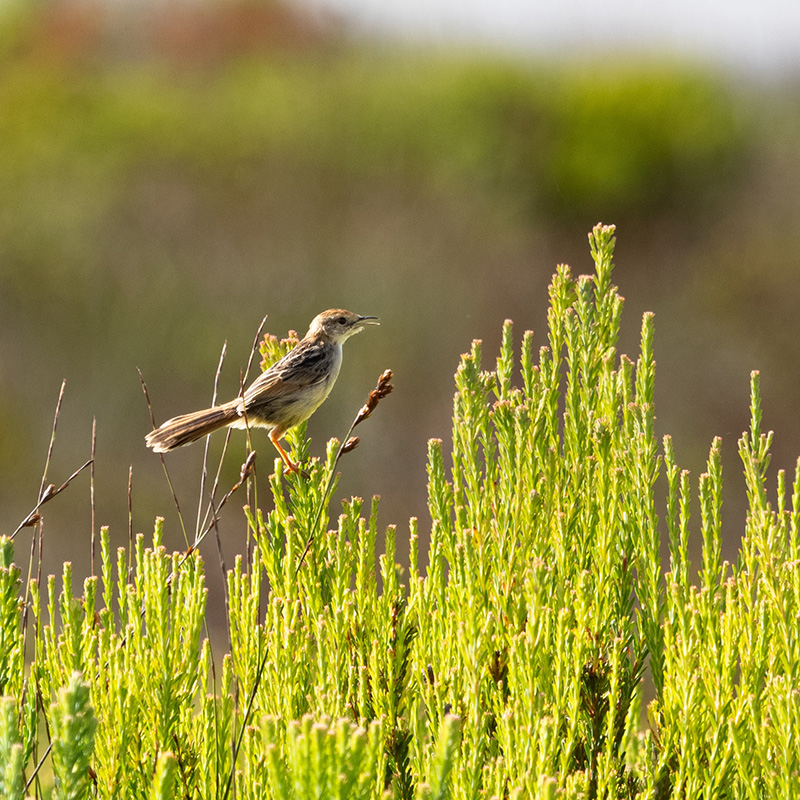
Rehabilitating fynbos: For nature and people
Aside from clearing invasive alien plants along our rivers and in our wetlands, the NRNR team also undertook considerable clearing in our very threatened fynbos landscapes. Given that we’re home to Critically Endangered Agulhas Sand and Agulhas Limestone Fynbos, and Endangered Elim Ferricrete and Overberg Sandstone Fynbos, it’s vital to lend these habitats a helping hand. Through funding support from the National Lotteries Commission, we cleared invasive plants in areas affected by wildfires earlier in 2024, creating employment for 26 people.
Ecological burns
Clearing the way
The NRNR team planned and implemented a major ecological burn – carrying out a burn on 118 hectares of wetland system. Not only did this burn help to restore the vegetation which was more than 20 years old, but it also served as an initial clearing treatment for the low-lying vlei vegetation, which was infested with Australian myrtle, Acacia saligna and Acacia cyclops.
Here's what happens when you rewild
After invasive plants were cleared, this landscape didn’t need any additional help to recover. These pictures were taken over a period of two years, showing nature’s return.
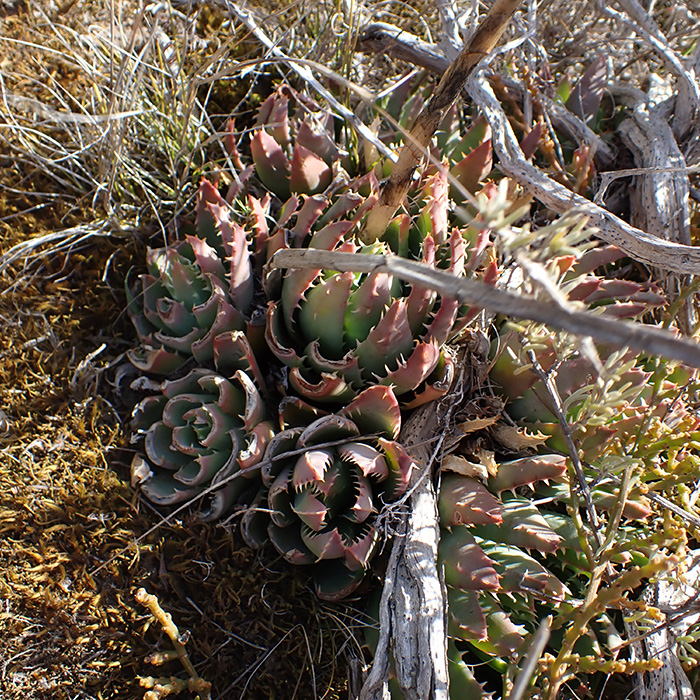
Island hopping for wildlife
Three islands came into the spotlight that pack a punch in terms of the plant life on them. But these fragments were threatened by invasive alien plants, potential overgrazing and edge effects from farming. So we took action – read more here.
Fire & invasive species: The plan
With support from the Fynbos Trust, the Nuwejaars team created a comprehensive database mapping invasive alien species across our 47 000-hectare landscape. Initial density estimates were generated using satellite imagery, and then refined through site visits and ground-truthing to confirm the species present, along with age class and density assessments. This work forms part of our annual alien density verification process, covering all 364 sub-management units within the NWSMA.
In total, 29 terrestrial alien invasive large tree species have been identified through this process. On our iNaturalist database, however, 69 alien invasive plant species have been recorded within the NWSMA boundary over the past year, including grasses, perennials and agricultural weeds.
The database also records fire history – noting when each area last burnt. This combined information has become a powerful management tool, allowing us to prioritise areas for clearing and determine where fire can be used as an effective control method. In these cases, a follow-up plan is implemented to address regrowth after the burn.
Aquatic habitats: The health check
As part of our commitment to healthy river systems, we conducted water quality testing at more than 168 sites along rivers within and bordering the Nuwejaars Wetlands SMA. At each site, we measured phosphate (PO₄), nitrate (NO₃), ammonium (NH₄), pH, dissolved oxygen levels, electrical conductivity, and water temperature. The results were encouraging – the Nuwejaars River, its tributaries and the off-stream dams all fall within a healthy water quality range, supporting diverse aquatic habitats and the species that depend on them.
Fynbos forever on the NWSMA
Plant sightings
Plant species identified
Species of Conservation Concern identified
With support from the Table Mountain Fund, an associated Trust of WWF South Africa, we conducted extensive habitat and vegetation surveys across the NWSMA to identify the species present and better understand the threats facing our unique fynbos ecosystems. The project also aims to safeguard the long-term health and ecological function of Species of Conservation Concern by enhancing habitat integrity.
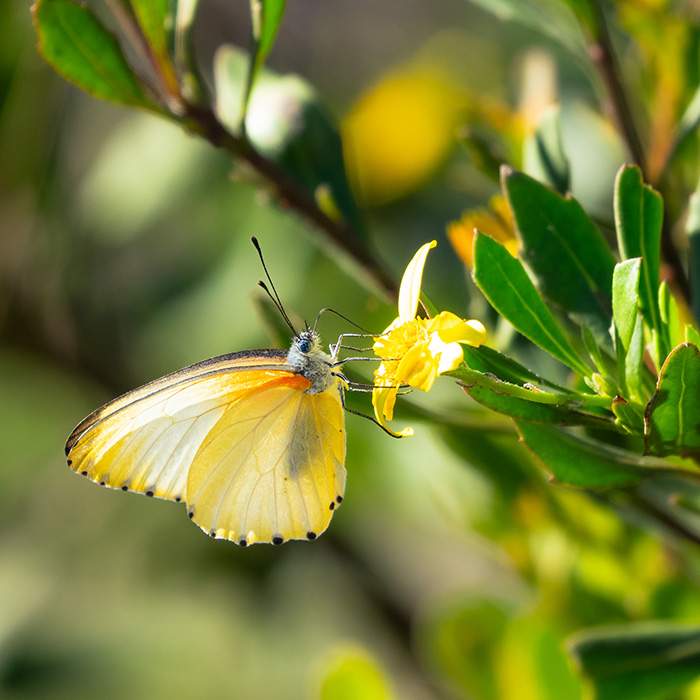
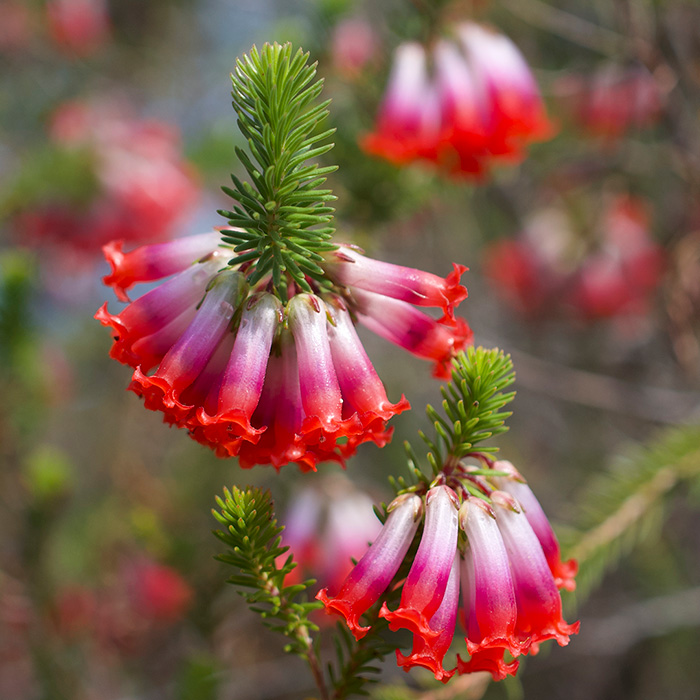
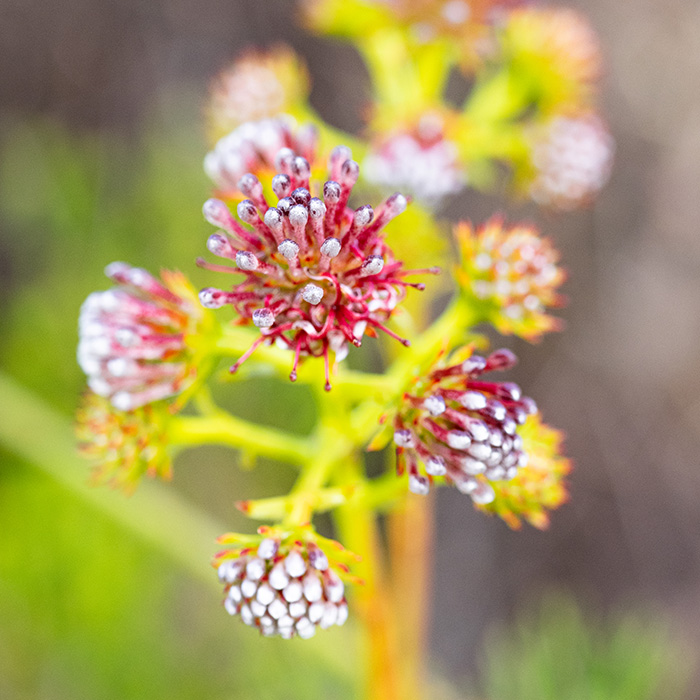
Over the course of this three-year initiative, we made remarkable discoveries, including several Critically Endangered species previously unknown in the area – and even one species thought to be extinct. In the past year alone, the project recorded a total of 1 792 plant species within the NWSMA, with approximately 10% classified as Species of Conservation Concern.
Objective 3
Identify & research species of conservation concern
Protecting the fynbos fish of the Nuwejaars
ha catchment area
15
669
306
163
rivers sampled
km of perennial and non-perennial rivers
surveys conducted
sites visited
Protecting the fynbos fish of the Nuwejaars
- 15 rivers sampled
- 72 500 ha catchment area
- 669km of perennial and non-perennial rivers
- 306 surveys conducted
- 163 sites visited
Our fynbos fish
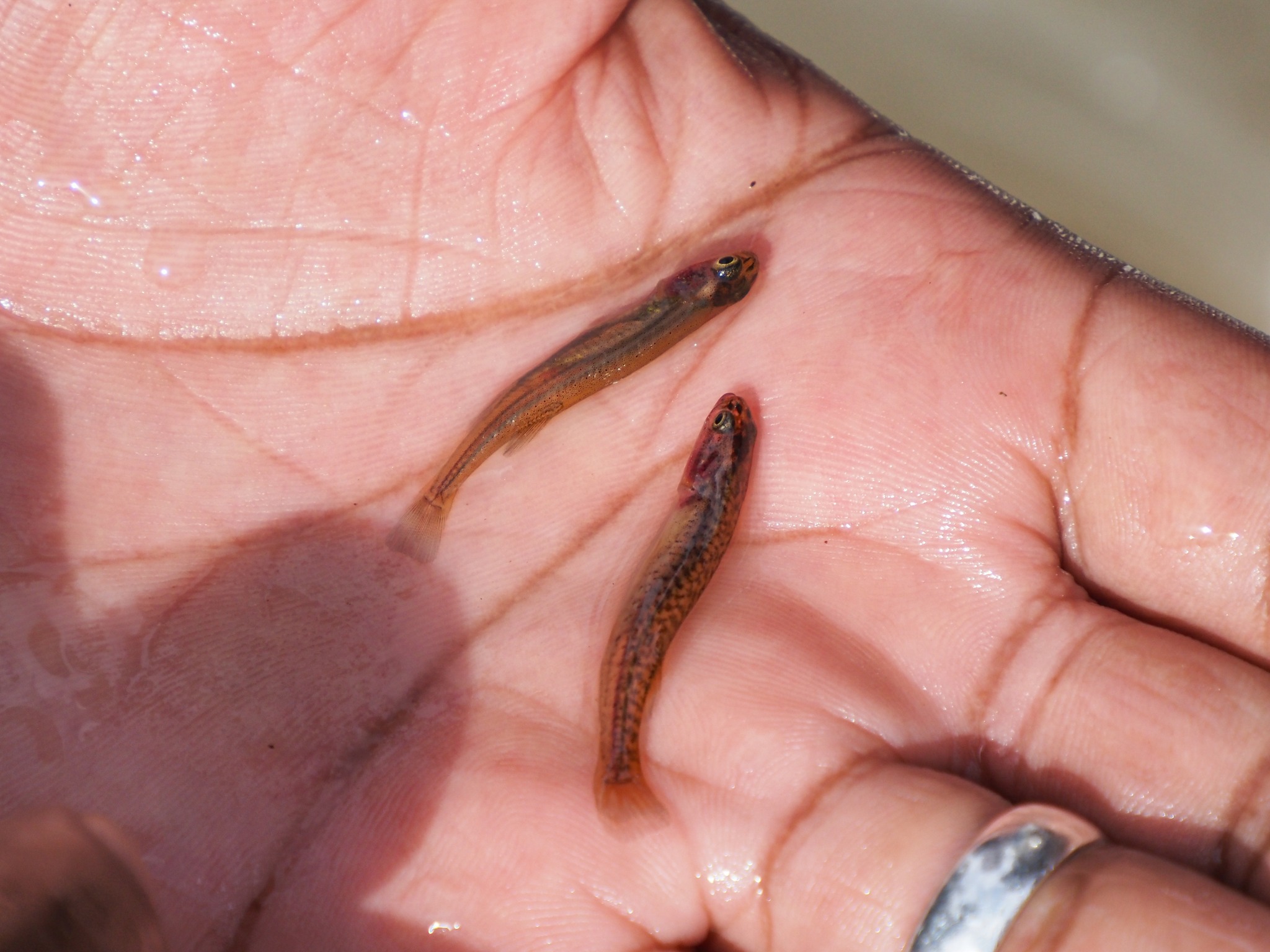
Funded by Fondation Segré through IUCN’s Save Our Species programme, the Nuwejaars team carried out a year-long survey to deepen understanding of fish species near Africa’s southernmost tip. Throughout the year, we sampled multiple sites across the 72 500-hectare Heuningnes catchment to identify species, map their distribution and abundance and assess the threats they face.
By the end of the project, Agulhas redfins (Pseudobarbus agulhas) were found at only 16 sites, while Heuningnes galaxias (Galaxias sp. nov. ‘heuningnes’) occupied 42 sites. The survey results highlight the importance of ongoing conservation efforts. In 2025, the project continues with support from the Mohamed bin Zayed Species Conservation Fund. Here’s more.
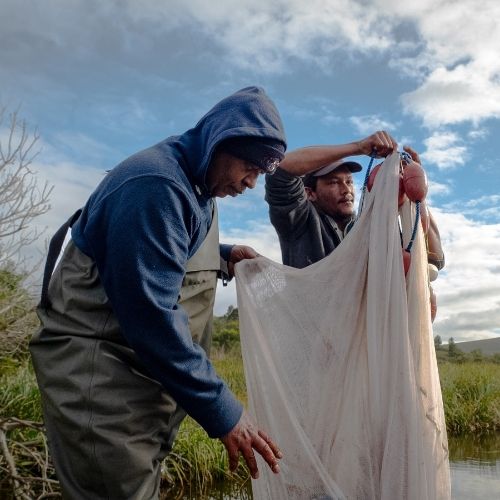
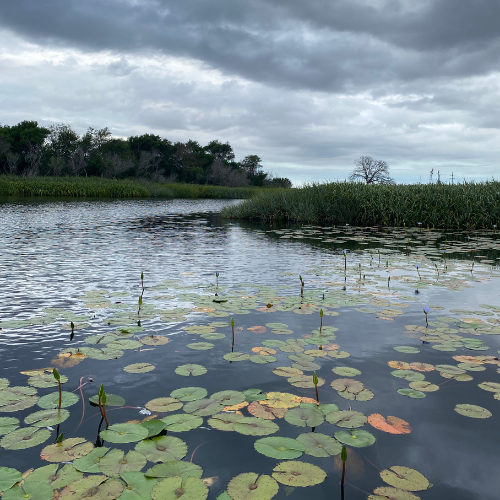
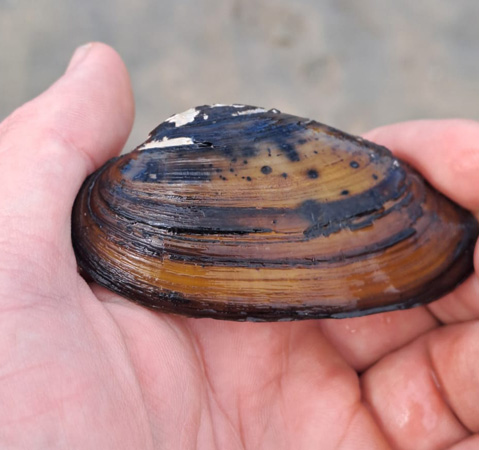
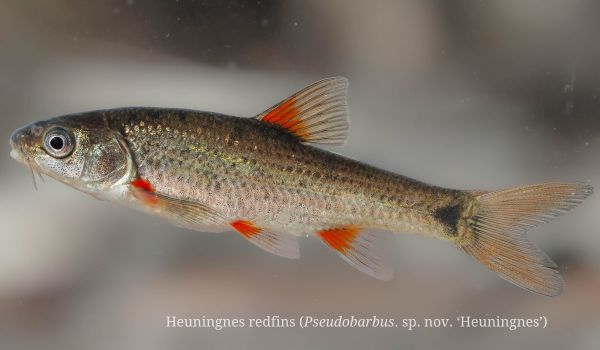
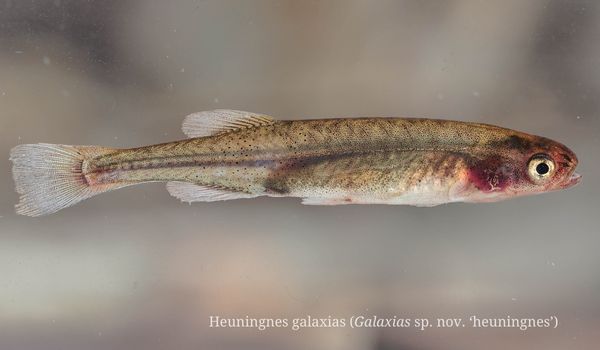
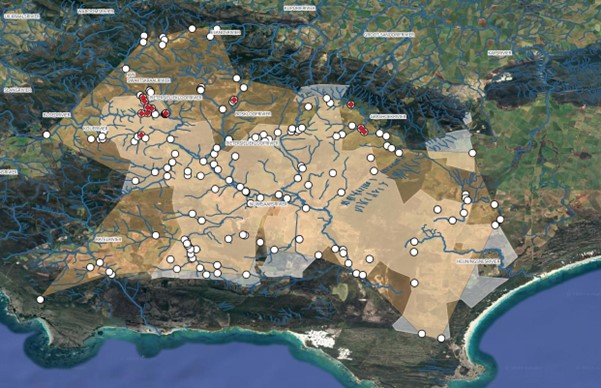


Of all the sites sampled in the Heuningnes catchment, Agulhas redfins were only found at 16 sites.
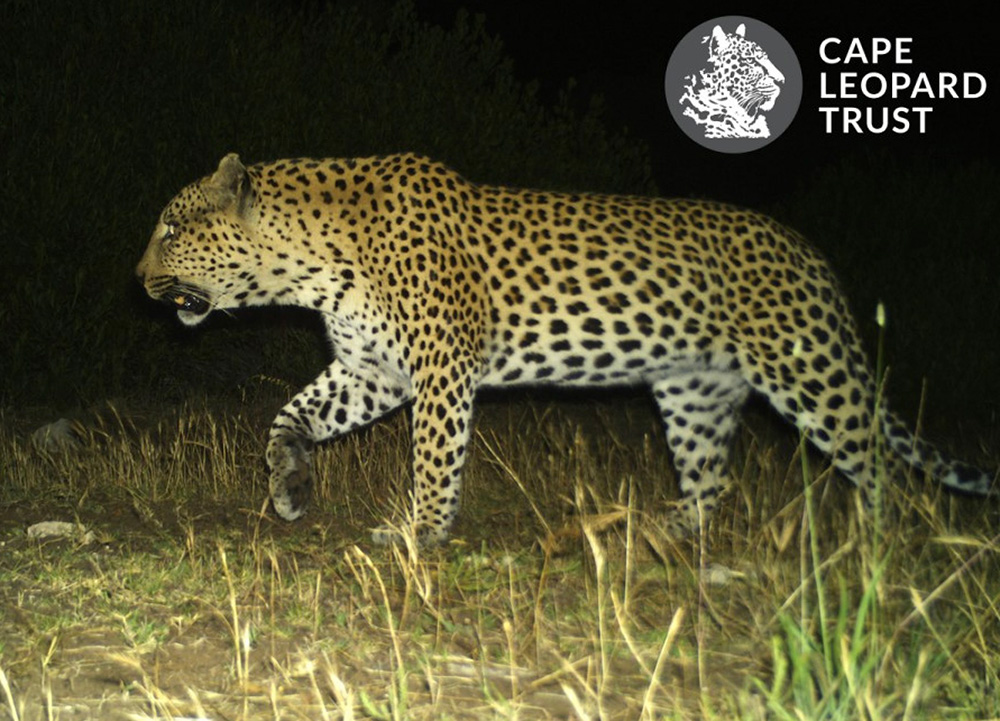
Leopard dispersal in the Overberg
Leopards are a flagship species of the fynbos-covered mountains in the Cape Floral Kingdom and are currently listed as Vulnerable on the IUCN Red List. The NRNR collaborates with partners like the Cape Leopard Trust to better understand leopard movements and the threats they face.
In 2024, the NRNR team, including Erica Brink and Eugéne Hahndiek, co-authored a research paper with the Cape Leopard Trust, led by senior researcher Anita Wilkinson. Published in the African Journal of Ecology, the paper – titled Leopard dispersal across a fragmented landscape in the Western Cape – revealed that the dispersal distances of individual leopards monitored ranged from 35km to 112km from the origin to the destination data points. Read more about these fascinating findings.
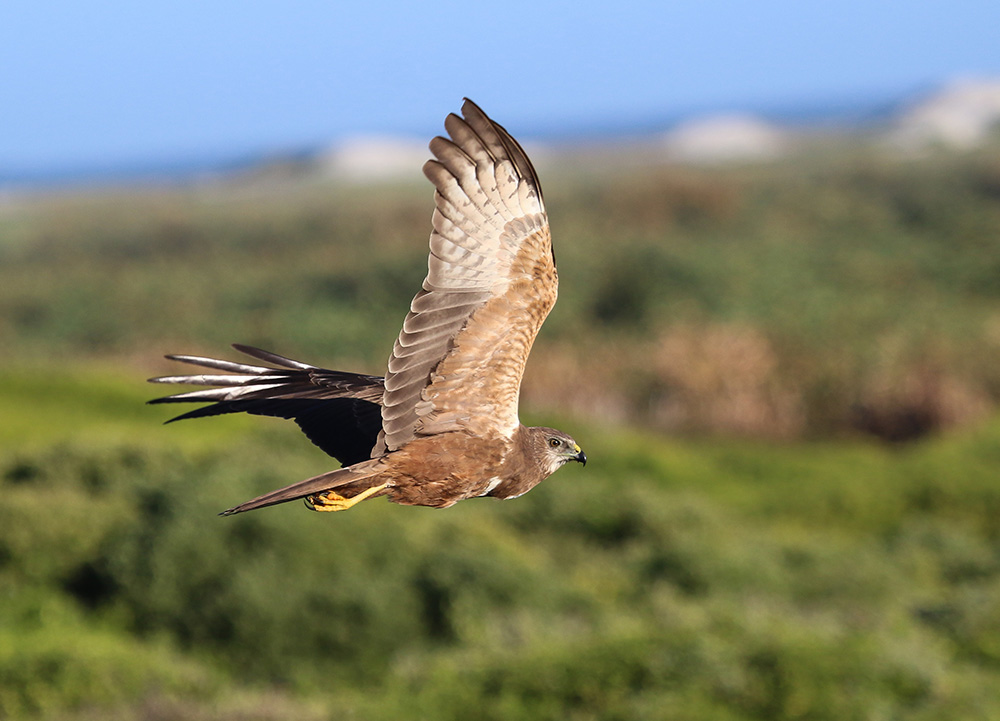
Marsh Harriers return
In a promising sign of ecological recovery, African Marsh Harriers have been spotted nesting and hunting in the rewilded wetlands of the Nuwejaars Wetlands SMA. In the past year, avifaunal expert Eric Herman visited the wetlands to survey breeding and nesting birds. He found an estimated 12 nests, with eight nests confirmed, across three wetlands. Their return underscores the success of our conservation initiatives and the resilience of nature when given the chance to heal. More here.
Fynbos forever: Why each fynbos species counts
A rating system for our fynbos
Through funding support from the Table Mountain Fund, and with the help of botanist Doug Euston-Brown, we developed a Species of Conservation Concern list. This list grades species from 1 – 5. Species rated 1 are least concern, and those rated 5 are of very high conservation importance, and mostly only occur on the NWSMA. Of the 276 species assessed by Doug and the team, 36 were given a 5 rating.
Some of the special fynbos sightings
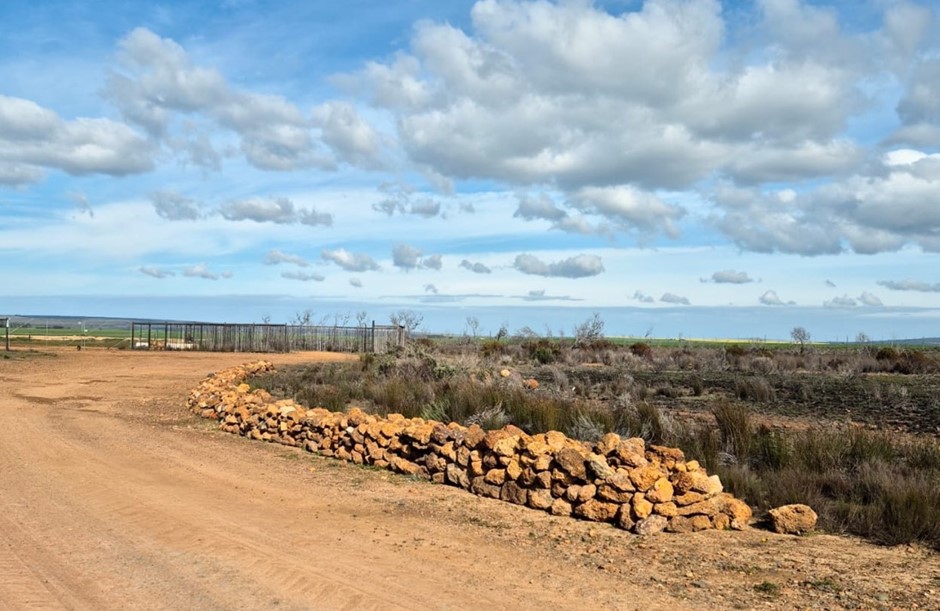
A rock wall to protect the Mini Galaxy
After the remarkable rediscovery of a tiny Moraea species – thought to have been extinct for more than 40 years – urgent conservation measures were needed. Just a handful of Moraea minima plants were found clinging to life on a busy road verge, vulnerable to passing traffic. To safeguard these precious survivors, a protective rock wall was built, ensuring vehicles can no longer drive over them.
Objective 4
Promote & manage compatible uses of nature
Piloting opportunities to sustain conservation
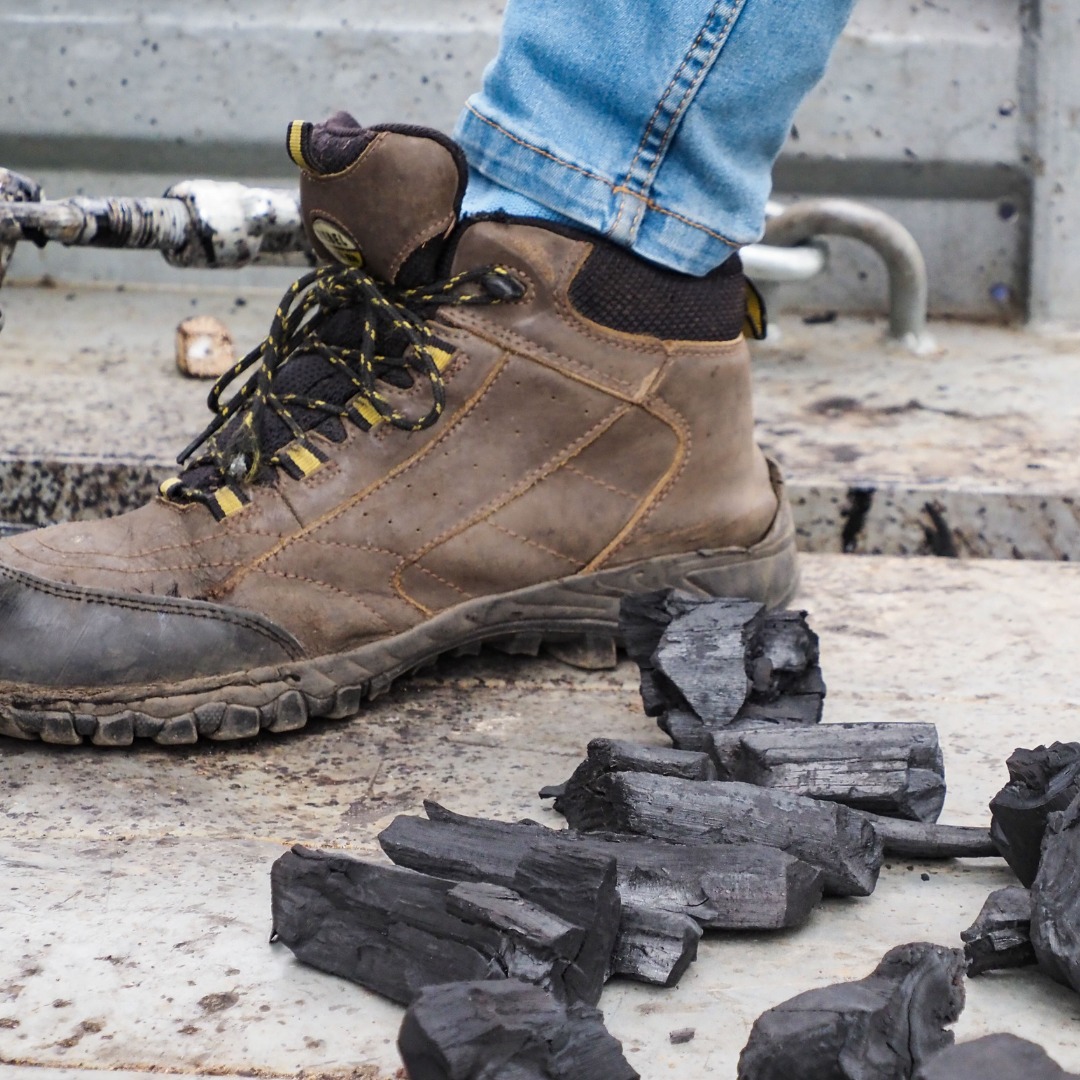
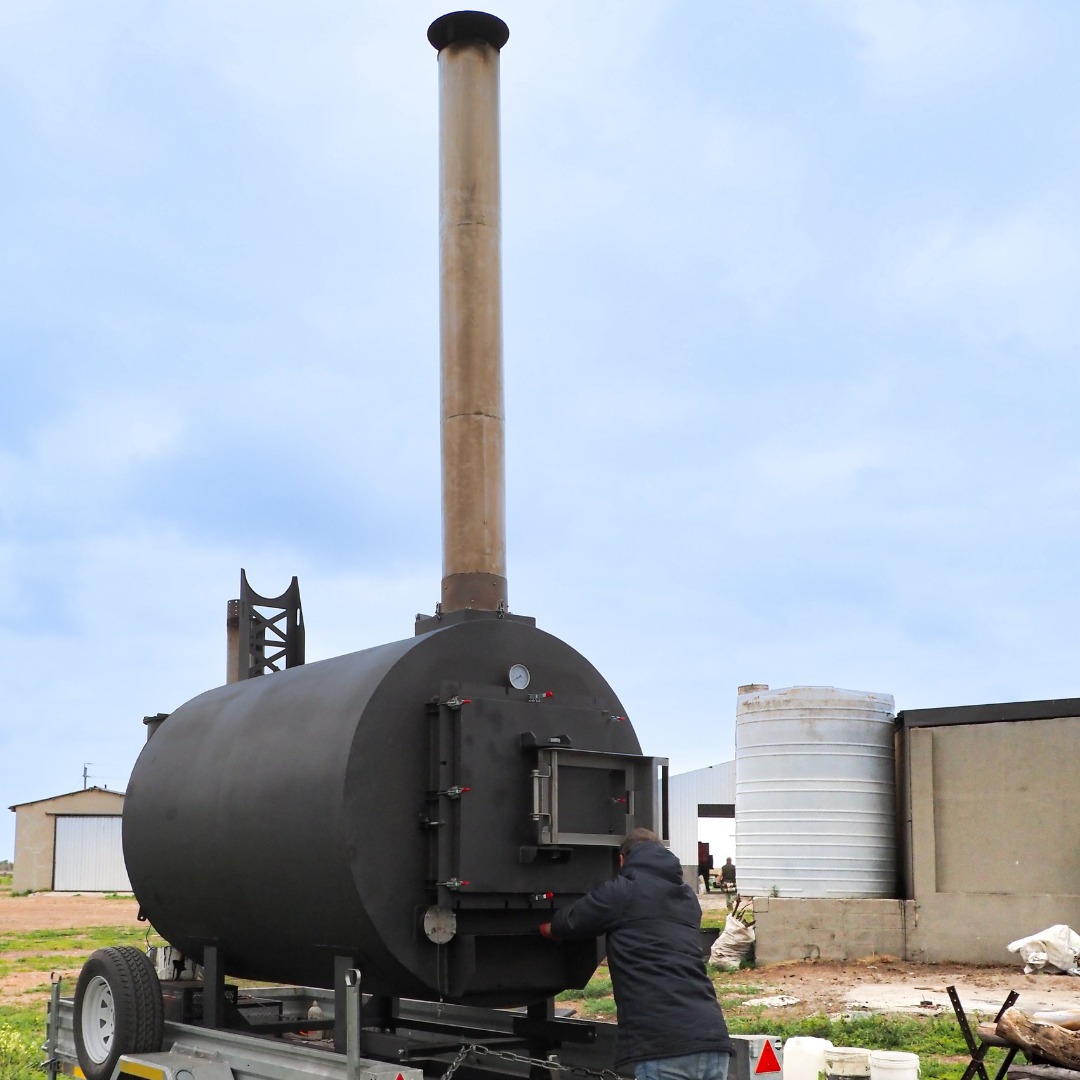
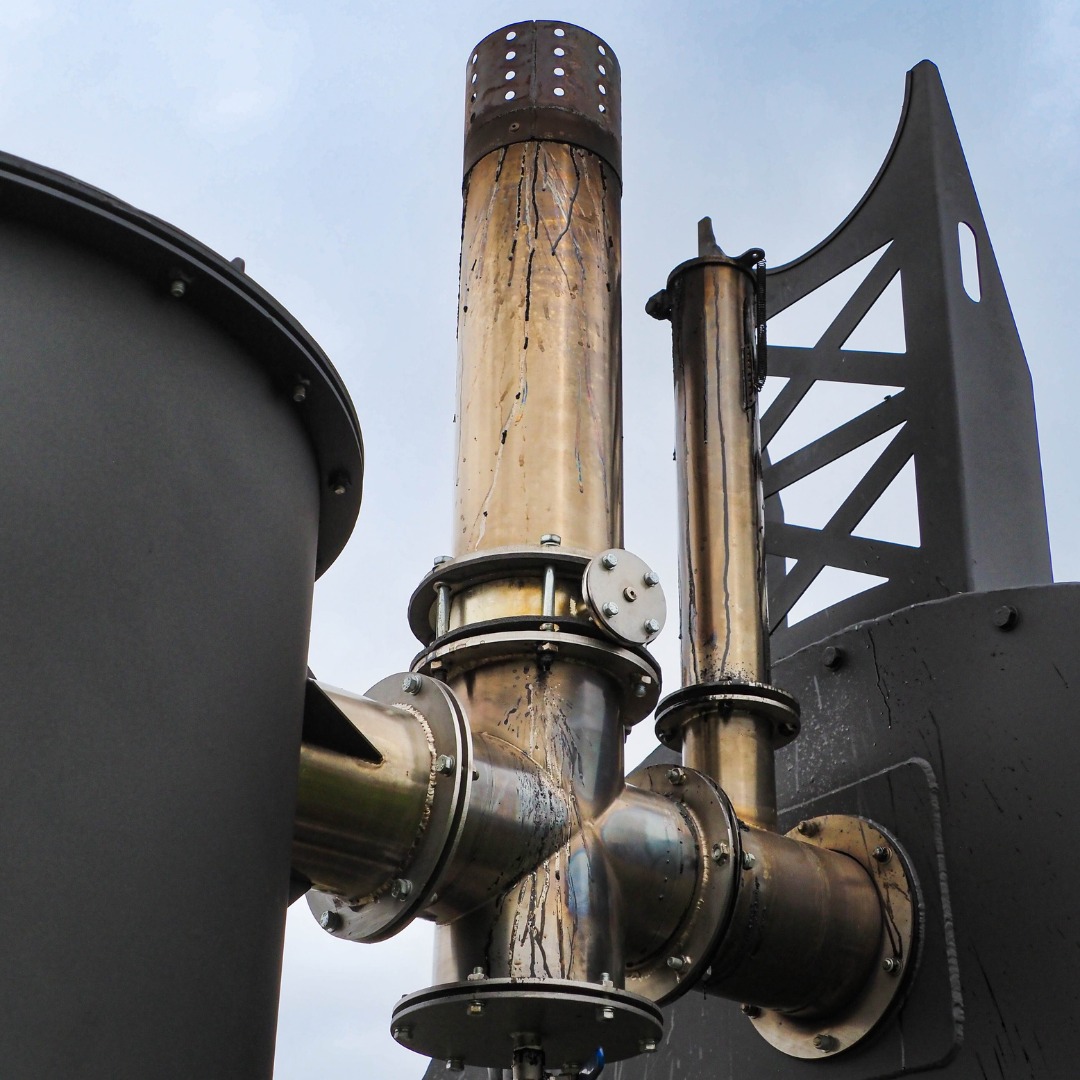
A ‘char’-ming solution
The NRNR team is tackling one of the biggest threats to our wetlands – invasive alien plants – by transforming them into biochar. Supported by the IKI Small Grants Initiative, part of Germany’s International Climate Initiative, the project aims to protect these wetlands and Critically Endangered fynbos landscapes while creating sustainable ways to fund conservation. Here’s more.
From invaders to innovation
Meet the newest member of the NRNR team – our Bio Agri Biolyser. This biochar reactor converts invasive alien plant biomass into high-quality biochar via a process called pyrolysis. Operations Manager Ross Kettles explains how it works:
Pellets to protect nature
With support from the IKI Climate Change Initiative, the NRNR has invested in a new pelletising plant. This facility blends a range of ingredients to create nutritious animal feed – including biochar made from invasive alien plants. Not only does this biochar support gut health in animals, but the income from pellet sales also funds further removal of invasive alien plants from our ecosystems. Here’s more.
Supporting skills and opportunities through nature
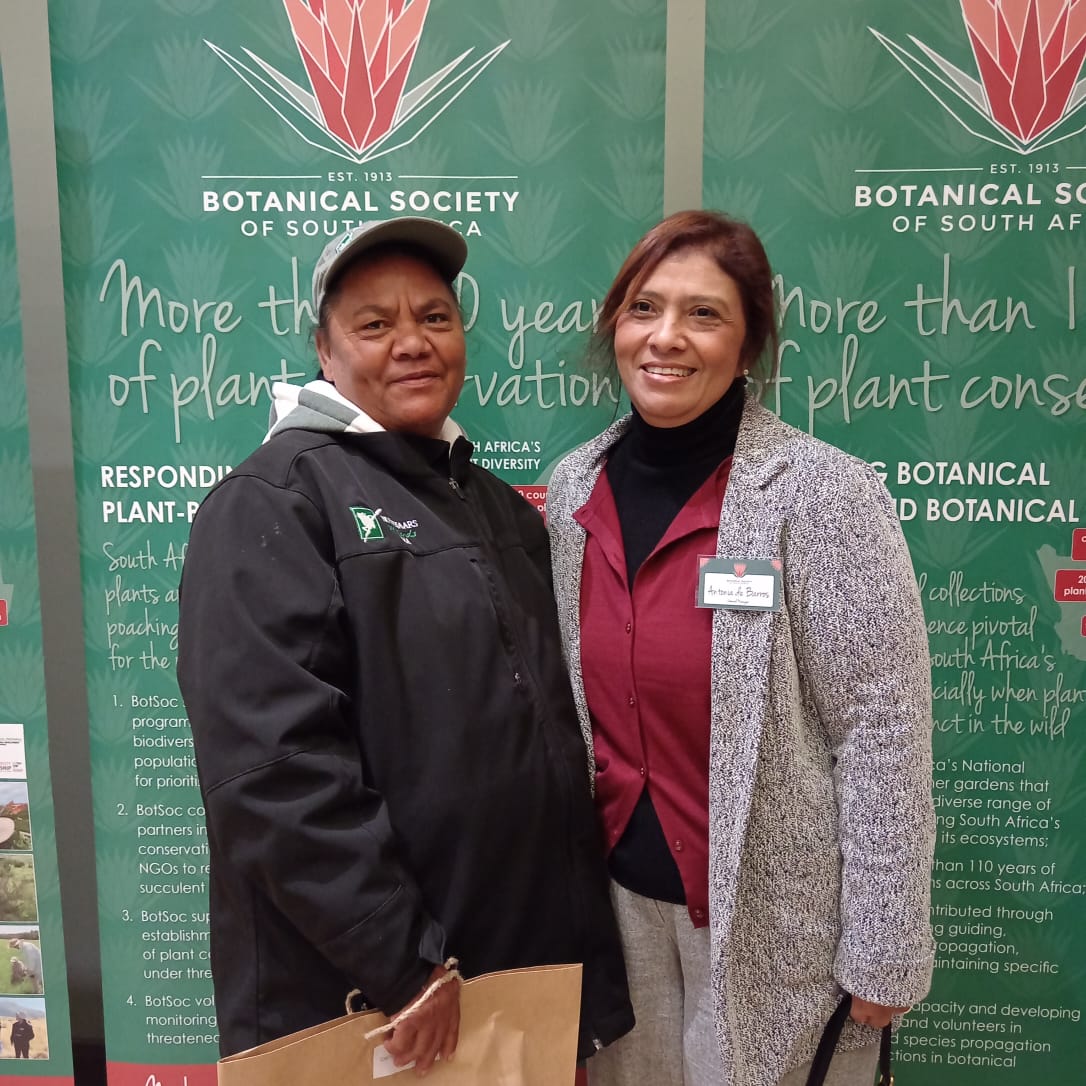
Over the past year, the Nuwejaars team partnered with a range of organisations to deliver training and socioeconomic development opportunities. Through our collaboration with the Botanical Society of South Africa (BOT SOC), fully funded by BOT SOC, three youths from the town of Elim joined us for six months of hands-on training under contractor Gerty Holtzhauzen’s leadership in invasive alien species management.
After initial training, they became part of Gerty’s team – boosting productivity and outputs – while also benefiting from numerous training and mentorship opportunities provided by both BOT SOC and the Nuwejaars team.These included fynbos nursery and propagation training at the Grootbos Foundation.
Read more
We also partnered with the Department of Agriculture to host training events open to our landowners and their staff, and continued our long-standing relationship with Overberg District Municipality (ODM), which has funded staff members through the Expanded Public Works Programme for the past seven years. Training highlights included milkwood propagation, fynbos nursery propagation, vegetable production, Occupational Health and Safety, and Safety, Health and Environment Representative courses. This year also saw personal achievements worth celebrating: both Hilton Olifant and Gurswhin Natal passed their driver’s tests.
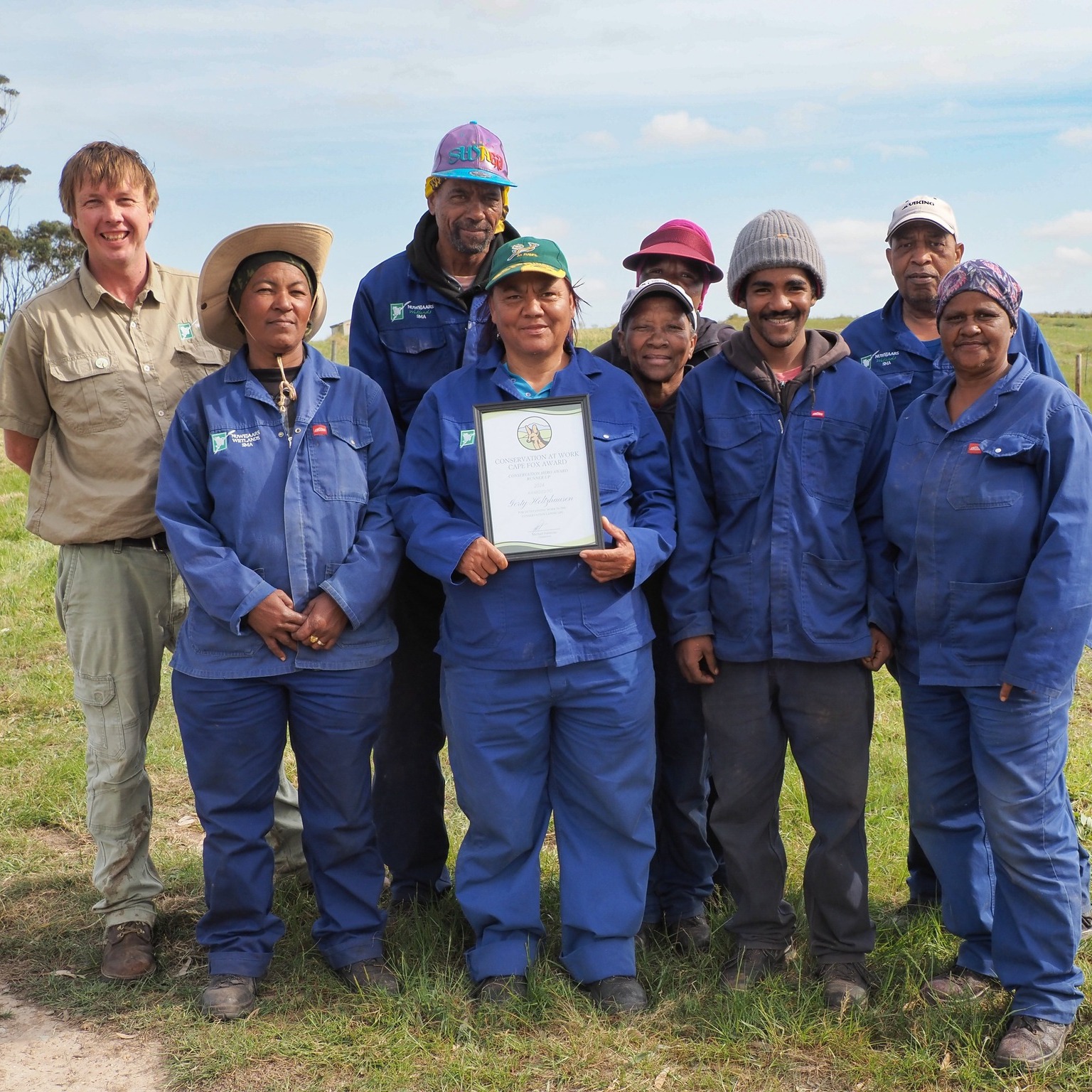
Conservation hero recognised
Our dedicated contractor Gerty Holtzhauzen – who has worked with the NRNR for the past seven years through funding support from WWF South Africa – was named runner-up in the Conservation Hero category at the Conservation at Work Cape Fox Awards, held in September 2024.
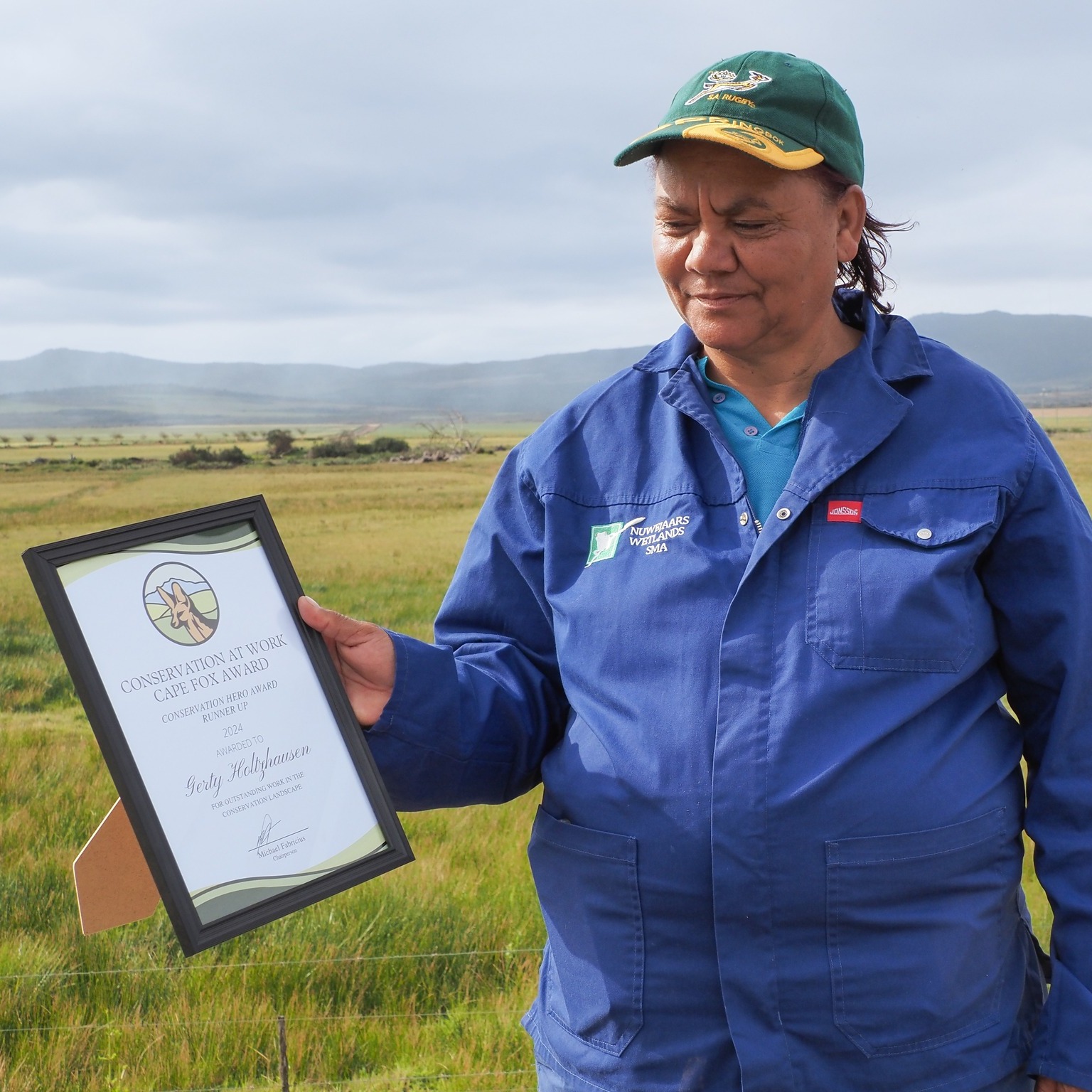
50 stories of nature supporting families
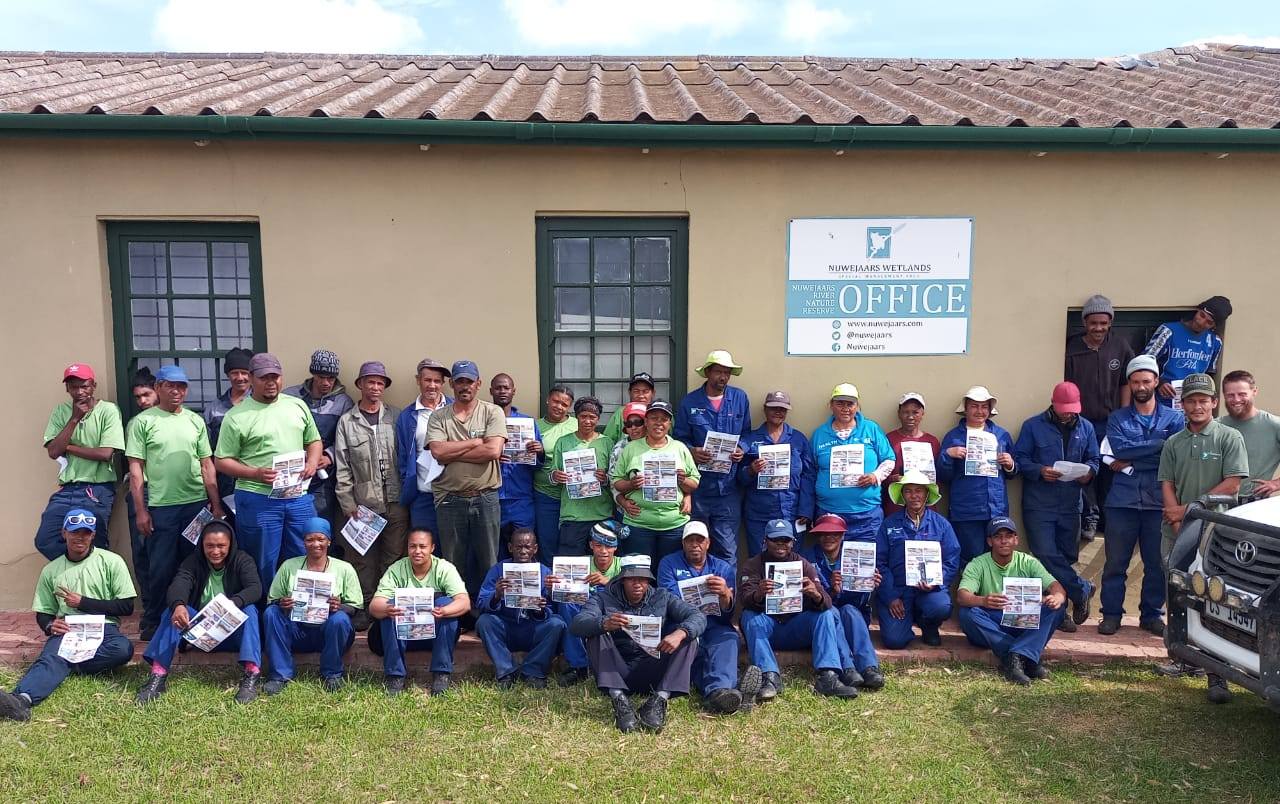
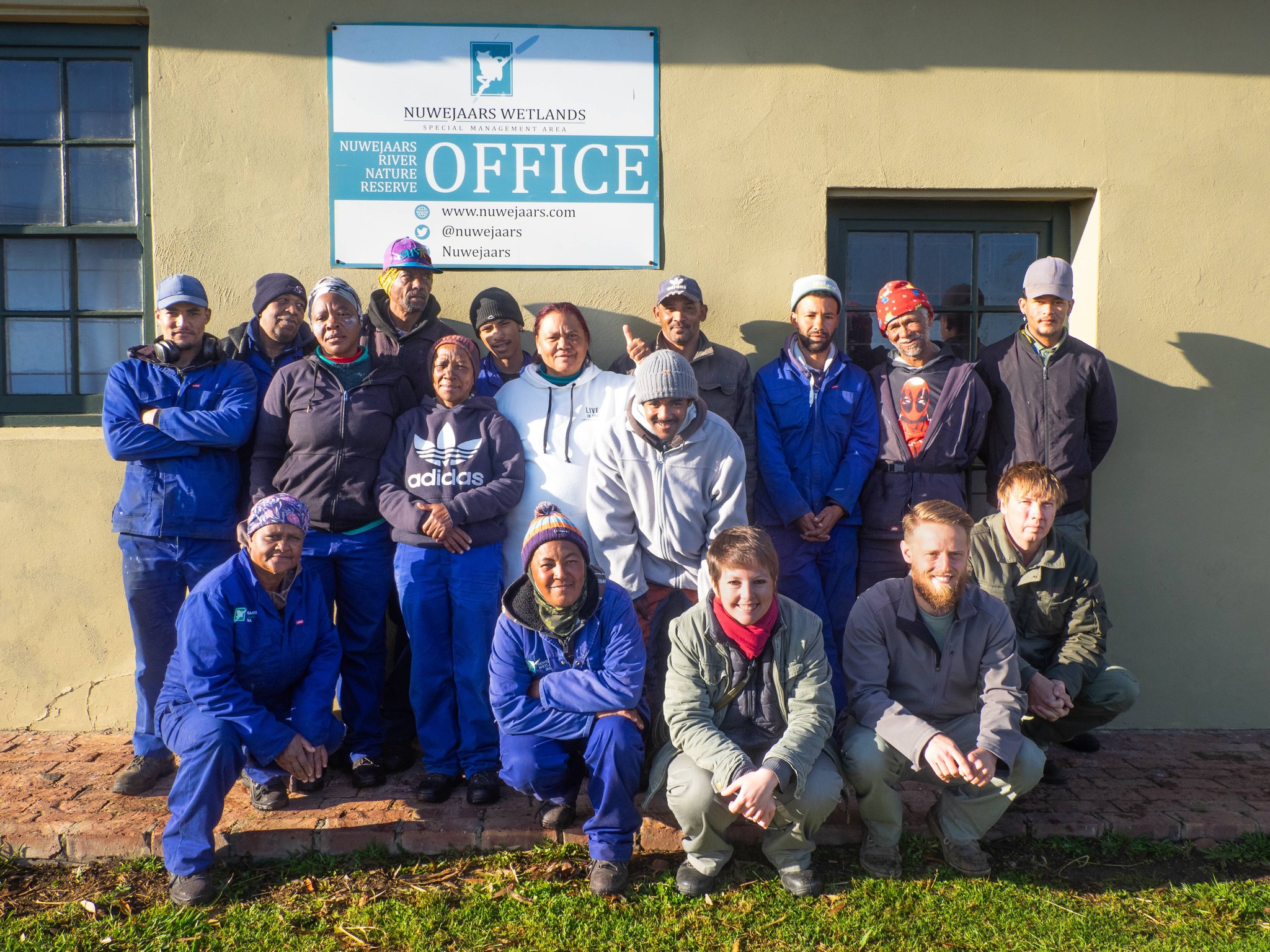
We’re proud to have employed 50 dedicated team members in the NRNR, whose work was vital to the success of our projects. Through nature-based jobs, each member of our NRNR team not only helps restore and protect our land and waterscapes, but also supports their families and contributes to the wellbeing of communities throughout the Agulhas Plain – both our farming communities and our towns.
Our tourism opportunities
A new, free walking trail opens
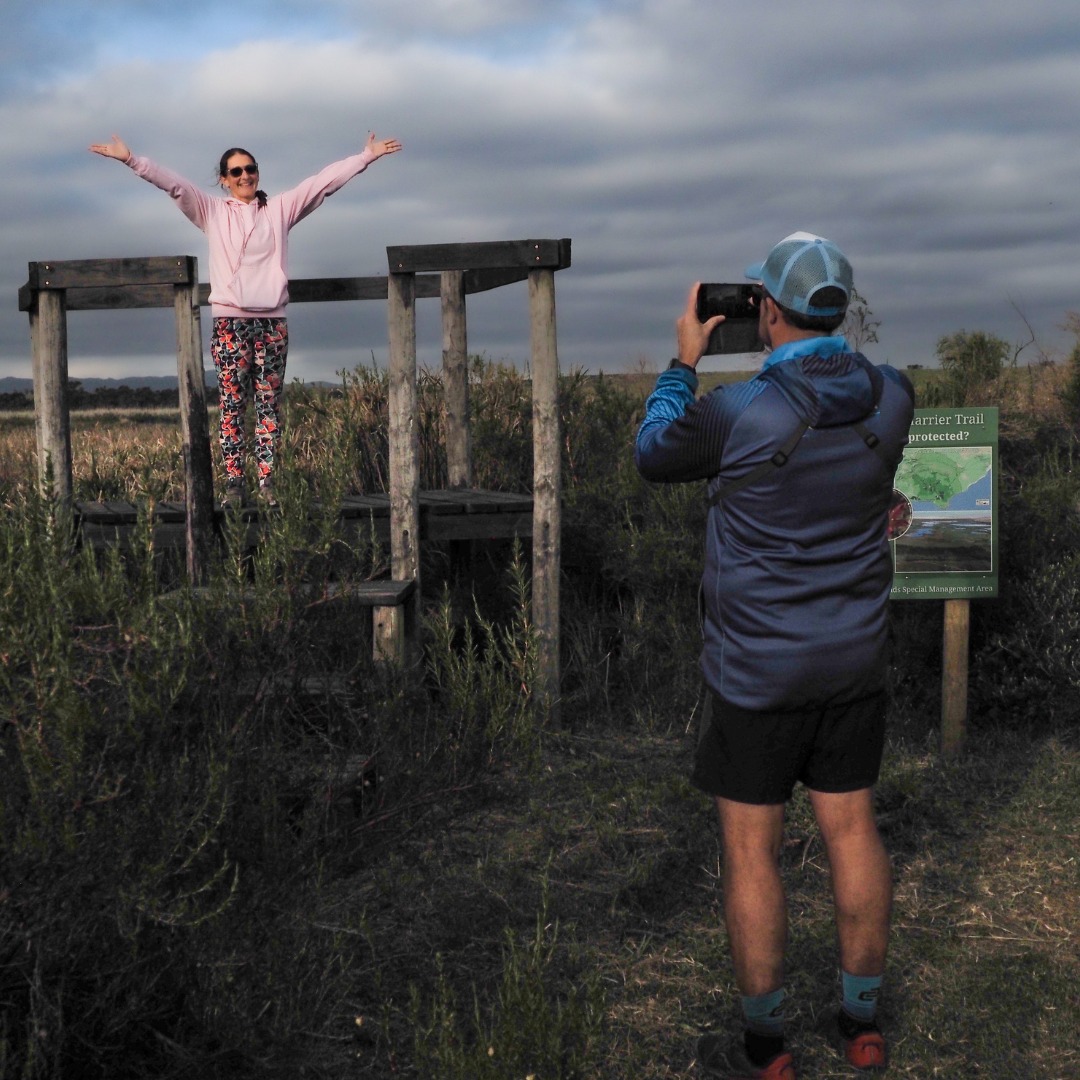
A new walking trail has opened in the NWSMA, guiding visitors along the Nuwejaars River and showcasing the plants and animals that call this region home. It’s part of our commitment to making nature accessible to everyone – free of charge.
Stepping inside the hide
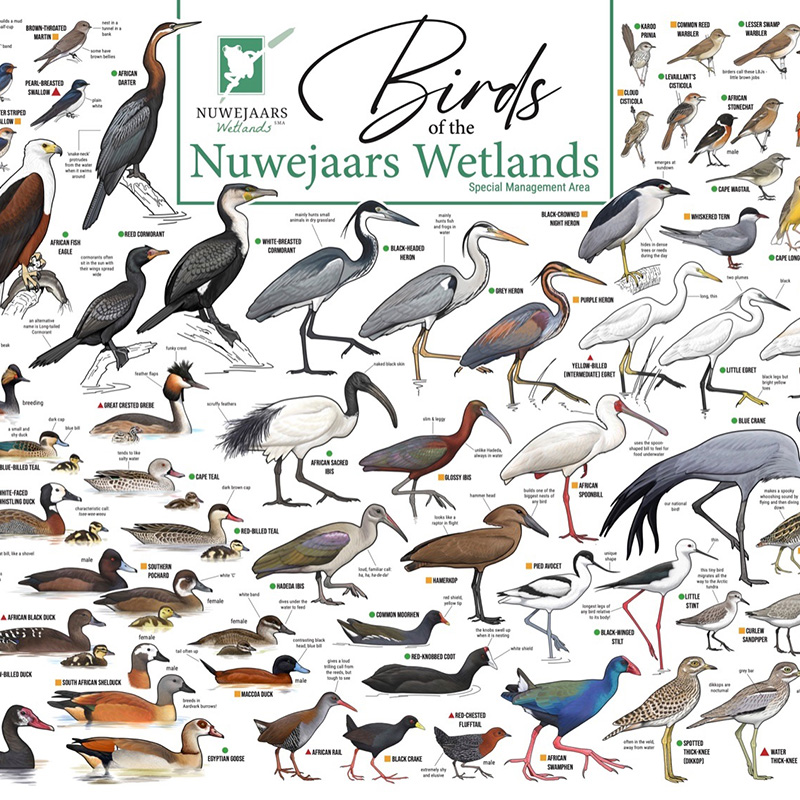
We teamed up with well-known author and artist Faansie Peacock. Faansie created the gorgeous signage showcasing the wetlands birds you could see on the African Marsh Harrier Trail, using his own paintings. This sign has been placed in the WWF South Africa Elizabeth Harding Bird Hide, situated along the Nuwejaars River.
The game of the Nuwejaars Wetlands
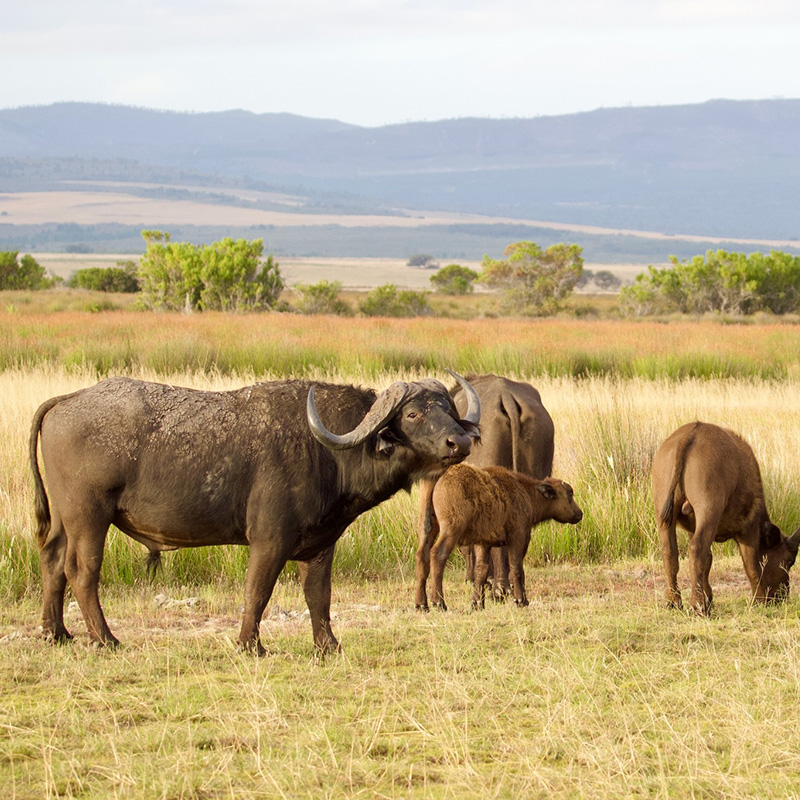
Buffalo calves signal a bright future
The buffalo of the NWSMA are a conservation success story. Reintroduced in the 2000s after being locally extinct for over 200 years, these iconic animals have truly been reestablished on the landscape. Over the past year alone, 10 buffalo calves were born – a sign of a thriving herd. Visitors now have the rare opportunity to see them in their natural habitat during guided wildlife tours, reconnecting with a part of the region’s ecological heritage that had long been lost.
Meet the rising star of our Rau Quaggas
Mercury is one of the young Rau Quagga stallions on the Nuwejaars Wetlands SMA. He has wonderful brown colouring on his back – a great trait in the Rau Quagga Project (just see his colouring in the video below). This project is using selective breeding to ‘bring back’ animals that closely resemble the now extinct quagga.
Wildlife tours on the NWSMA
Wildlife Guided Tours were hosted from November to April – bringing visitors into the wetlands and waterscapes, home to game such as our buffalo, hippo, eland, bontebok, Rau Quagga and many more species that roam this natural area. In the past year, we hosted 284 people on our tours, such as the Gansbaai Wine Tours team, who took this video.
Objective 5
Develop & promote best practice sustainable agriculture
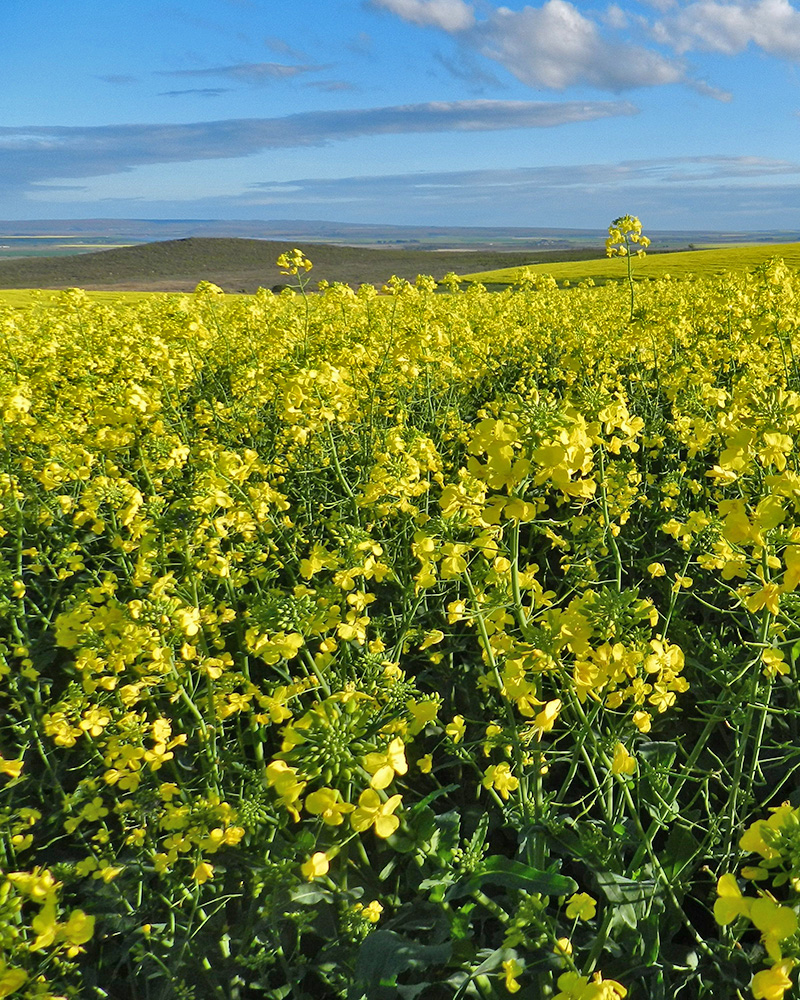
Farming with nature
The NRNR is made up of 26 landowners, including the town of Elim, who collectively farm roughly 23 000 hectares of agricultural land. Their approach ensures that agriculture and conservation thrive side by side – farming in a nature-friendly way that protects soil health, conserves water and maintains biodiversity.
Over the past year, we have worked even more closely with our members, compiling detailed reports on the quality of their aquatic habitats, including water quality assessments. These assessments revealed that the water in the Nuwejaars River and its tributaries is of good quality and well within recommended levels.
Such reports – along with other tailored assessments requested by landowners – can be used by farmers participating in ethical farming programmes to demonstrate their commitment to working in harmony with nature.
Objective 6
Promote the work of the NRNR
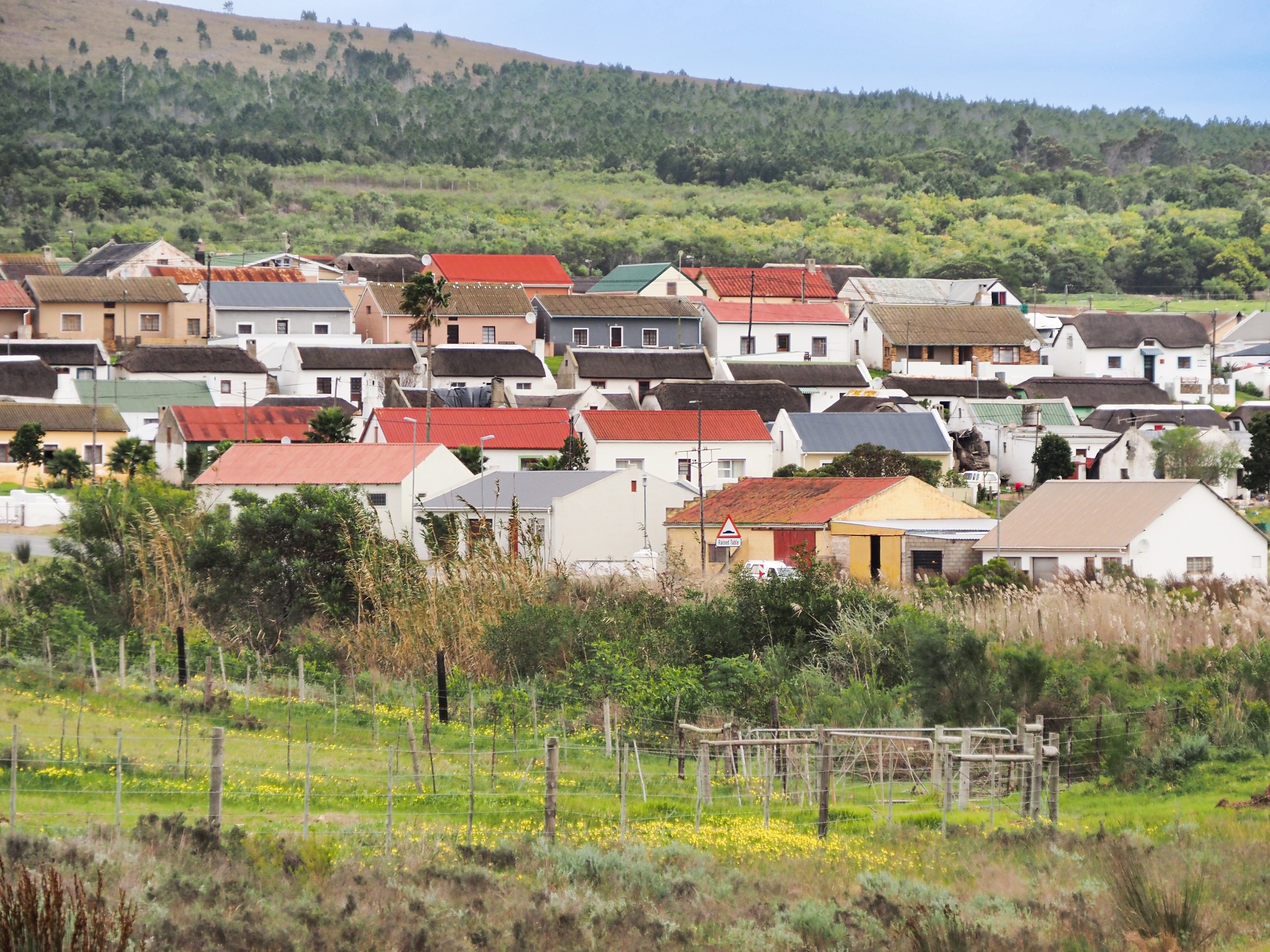
Elim at 200: Stronger than ever
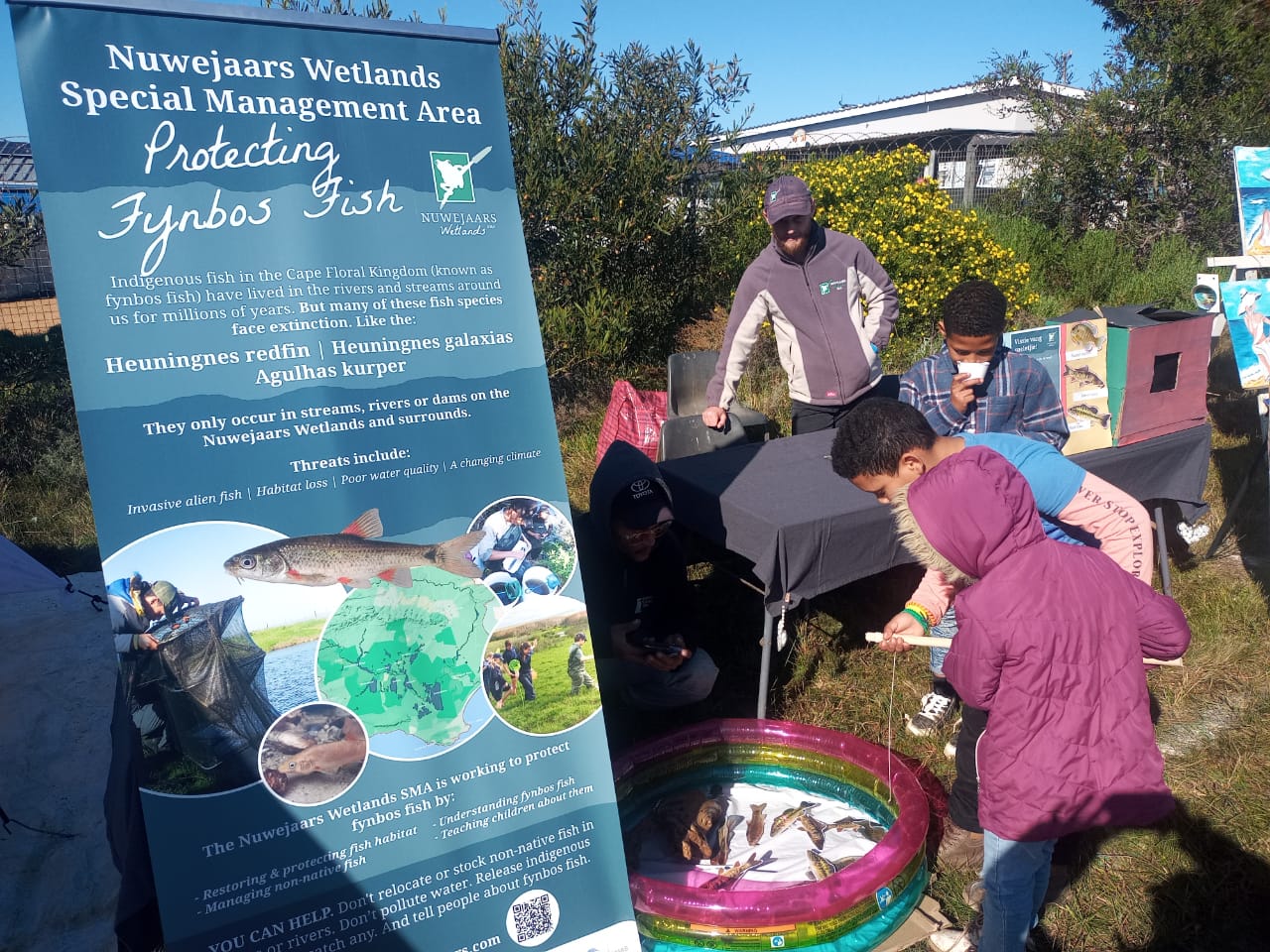
The historical town of Elim – a member of the NWSMA – celebrated its double centenary in 2024. And as part of the Elim Heritage Festival, celebrating Elim: 200 Years of Grace, the NRNR team had the opportunity to introduce visitors – young and old – to the Nuwejaars Wetlands, and in particular, the indigenous fynbos fish.
Through engaging activities, fun games and educational displays, children were able to connect with the importance of conserving these rare aquatic species. We extend our thanks to Elim Tourism for the opportunity to participate in this meaningful celebration, and congratulate the Elim Opsienersraad on hosting a well-organised and memorable event.
NRNR makes European conservation shortlist
The NRNR was proud to be named one of a select few finalists in a highly competitive programme hosted by the European Outdoor Conservation Association (EOCA). Winners were chosen through a public voting system, and while the NRNR didn’t take home the top prize, being shortlisted was a significant honour and a testament to the impact of our work. It’s another proud milestone – and a feather in our cap – as we continue our mission to protect and restore nature.
Telling our story through signs
A series of new signs were installed across the Nuwejaars Wetlands to enhance awareness and appreciation for our land and waterscapes. From messages urging drivers to slow down in our critical wildlife corridor, to educational signage along the African Marsh Harrier Trail and around fynbos fish habitats, the campaign combines conservation with public engagement. New signs also celebrate Elim’s longstanding role in protecting the wetlands, recognising the community’s deep-rooted connection to this special area.
Our wetlands spotlighted in bioblitz
As part of the Great Southern BioBlitz held in September 2024, the NRNR was proud to welcome experts from the Custodians of Rare and Endangered Wildflowers (CREW), NRF-South African Institute for Aquatic Biodiversity, and the Albany Museum to explore our wetlands. This collaborative event was a major opportunity to raise awareness about the rich biodiversity of our waterscapes and threatened fynbos, while contributing valuable data to global citizen science efforts.
Networking in the Nuwejaars Wetlands
The NRNR hosted a wonderful group of conservationists, landowners and government staff to visit the Nuwejaars Wetlands in the past financial year. Conservation Manager Eugéne Hahndiek and Operations Manager Ross Kettles took the group to our restoration sites, to see the work that has taken place. And the group met our stalwart contractor, Gerty Holtzhauzen.
Honouring our cultural heritage
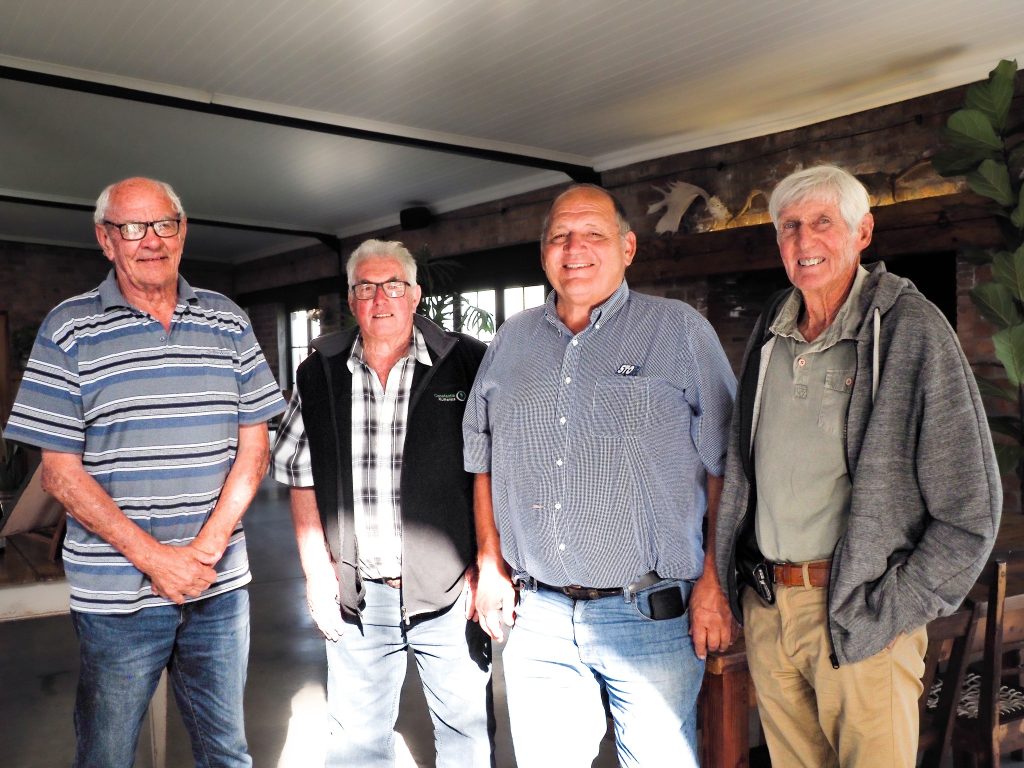
The elder statesmen of the Nuwejaars Wetlands SMA – Diko Swart, Urban Pratt, Mick D’Alton and Liohan Giliomee – joined the team for a morning of storytelling, sharing memories and insights from years gone by. Their reflections offer a vital link to the region’s past, as we work to preserve not only the natural significance of the Nuwejaars Wetlands, but also its rich cultural heritage. This marks the beginning of a broader effort to uncover and celebrate the deep historical value of this remarkable landscape.
Inspiring young minds through nature
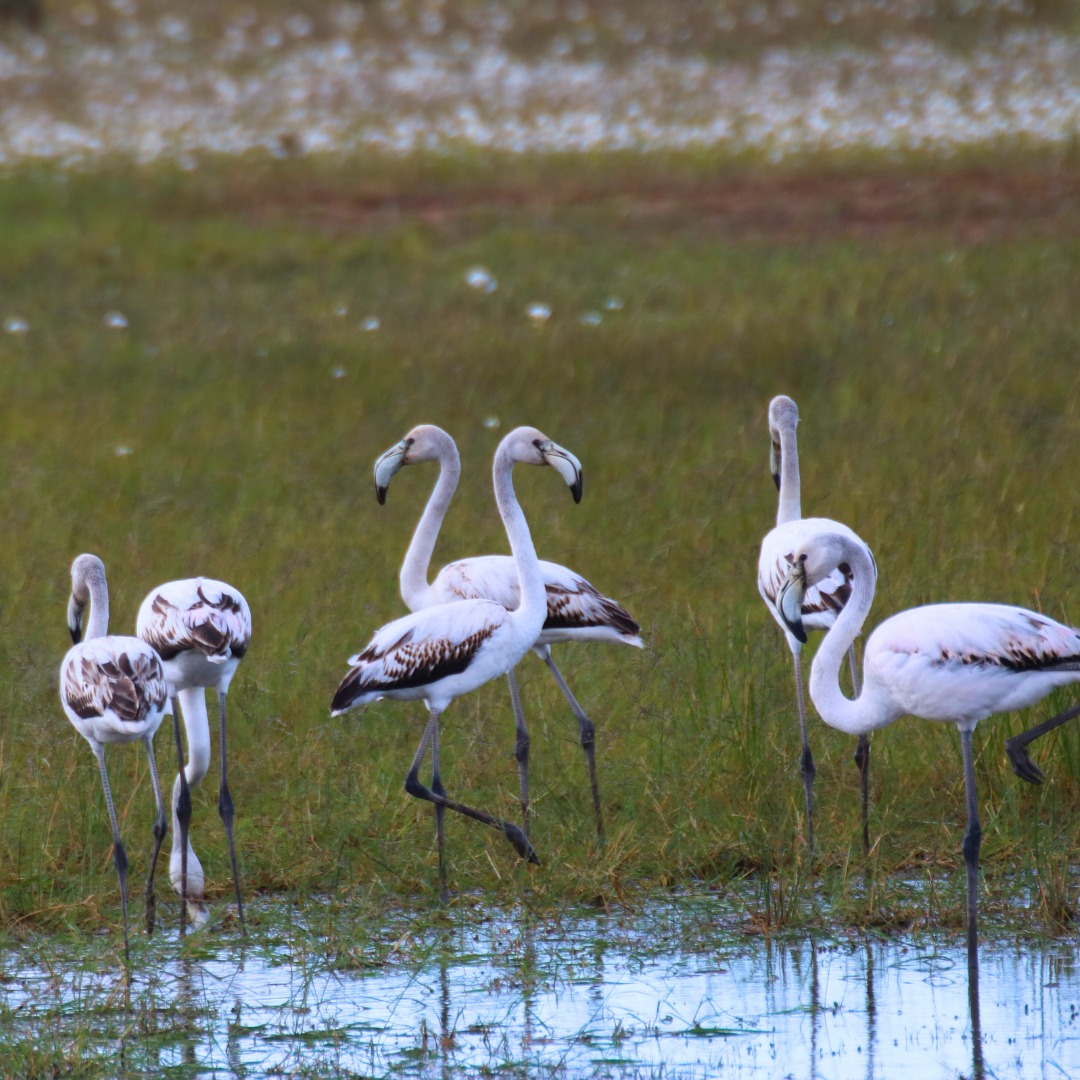
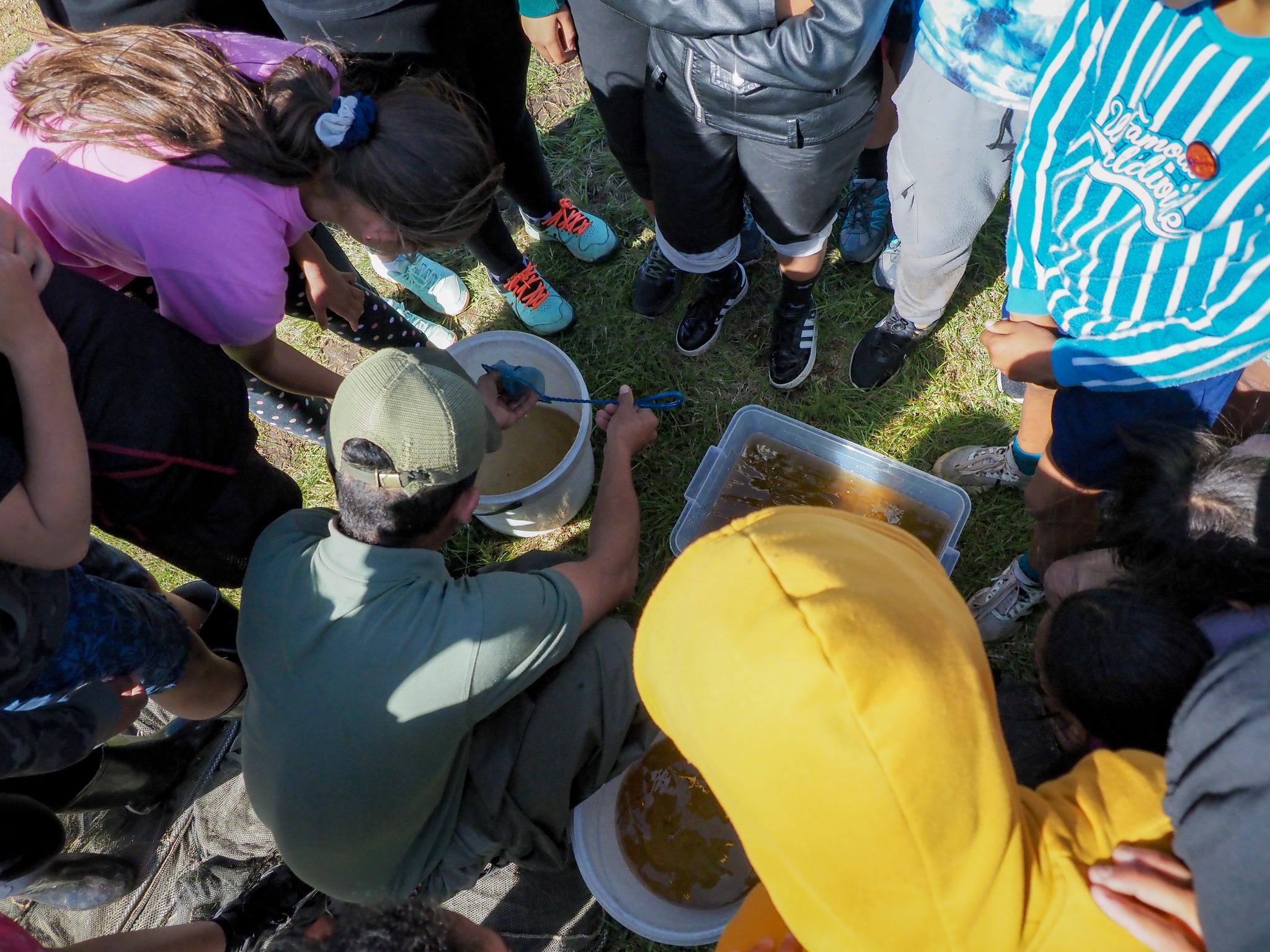
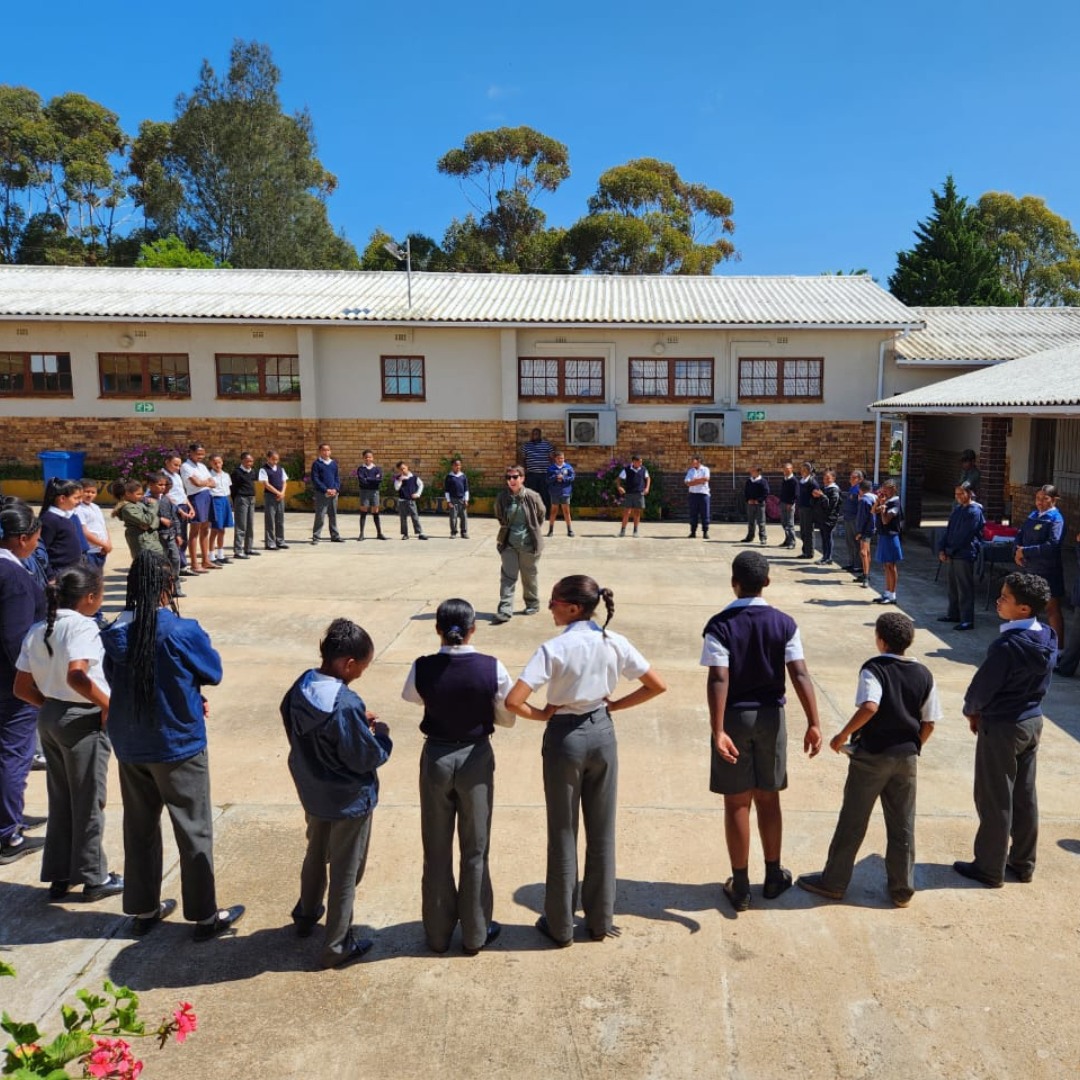
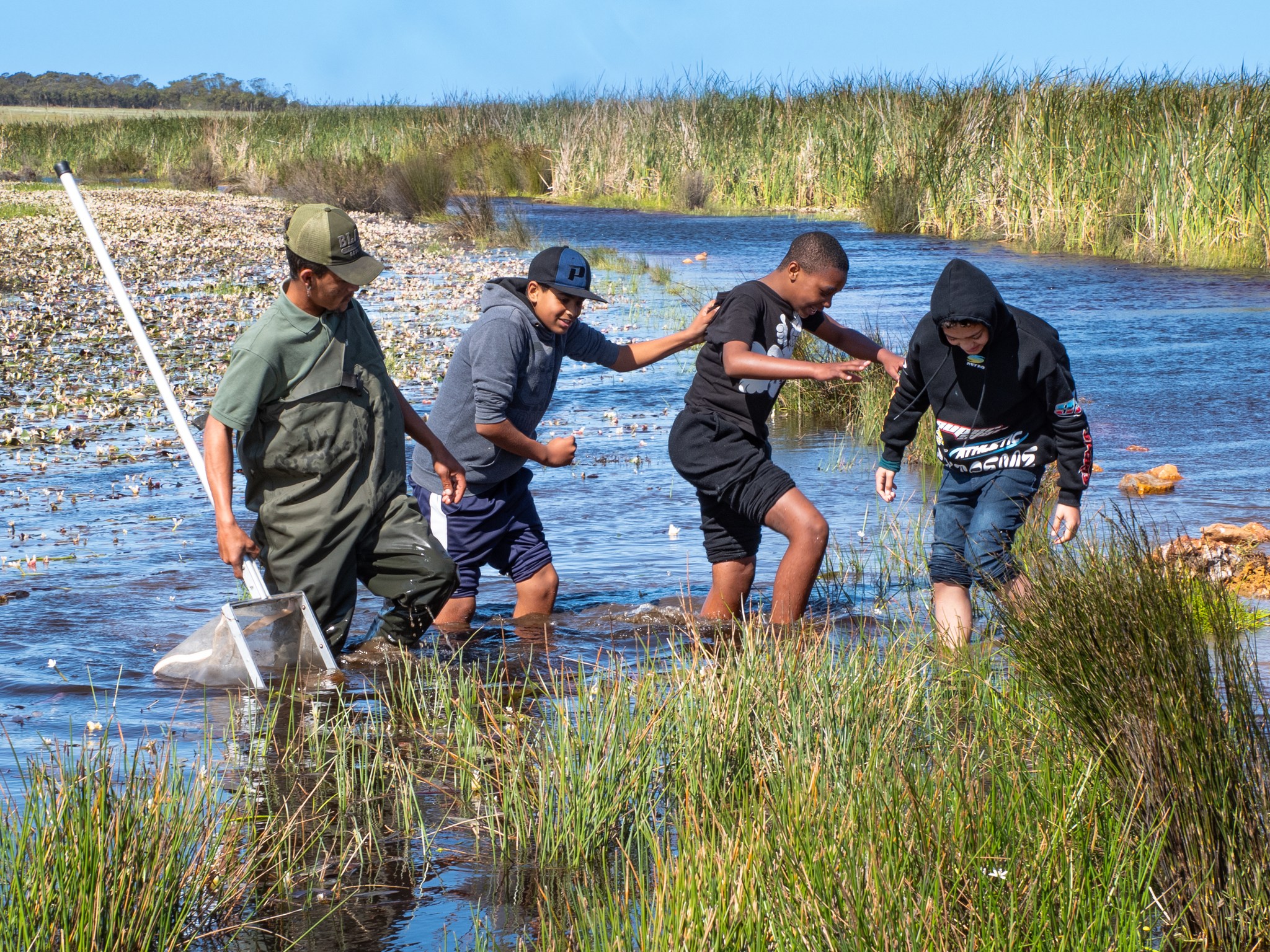
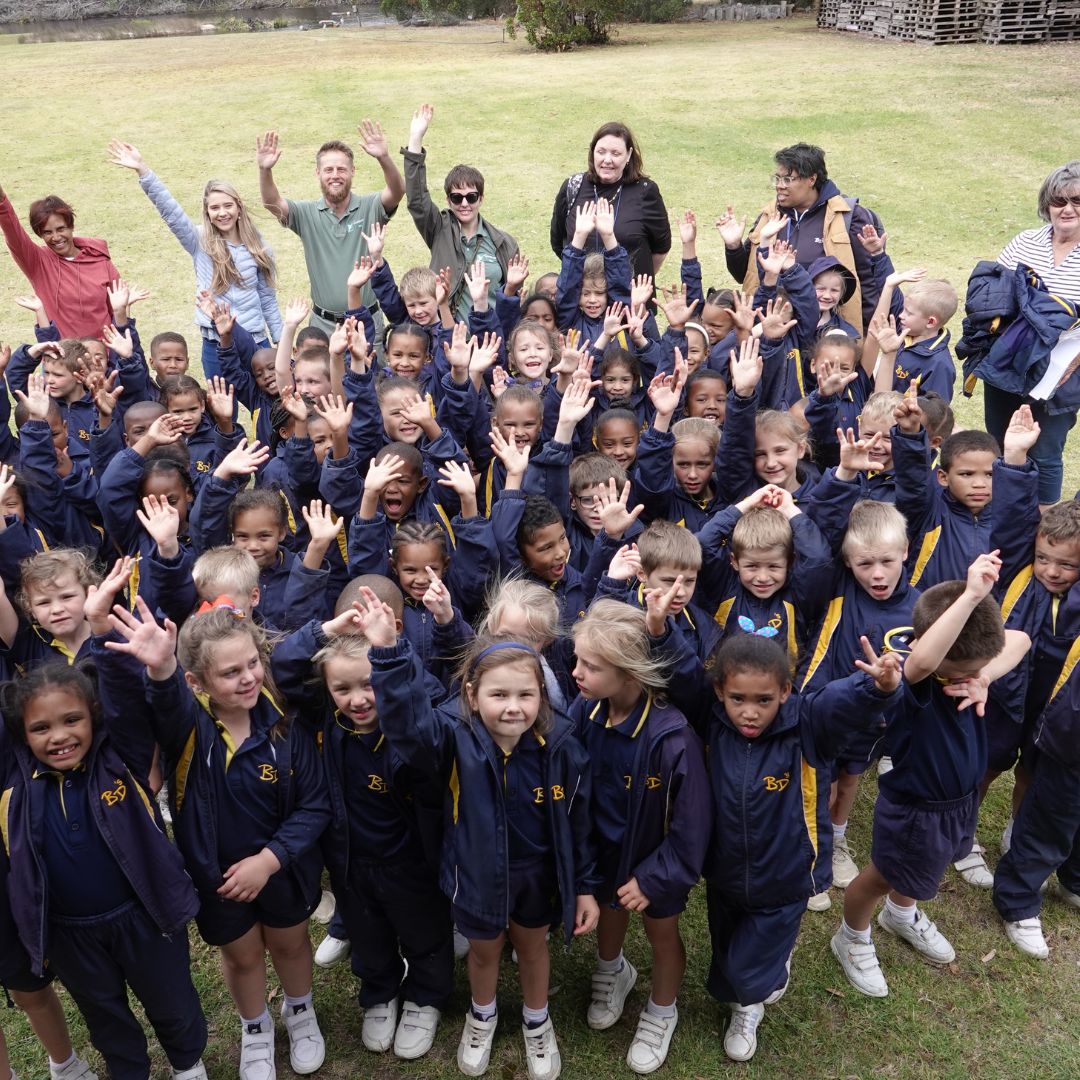
Over the past financial year, the NRNR’s environmental education programme reached more than 450 children, fostering a deeper connection to nature and conservation. Learners from schools including Elim Primary, Mispah School for Learners with Special Educational Needs, Zoetendal Academy, Bredasdorp Primary, Khula Learning Centre, and many others took part in hands-on learning experiences in the wetlands and surrounding landscapes. Through these sessions, learners explored our biodiversity, conservation challenges and the importance of protecting our natural heritage.
OUR REACH
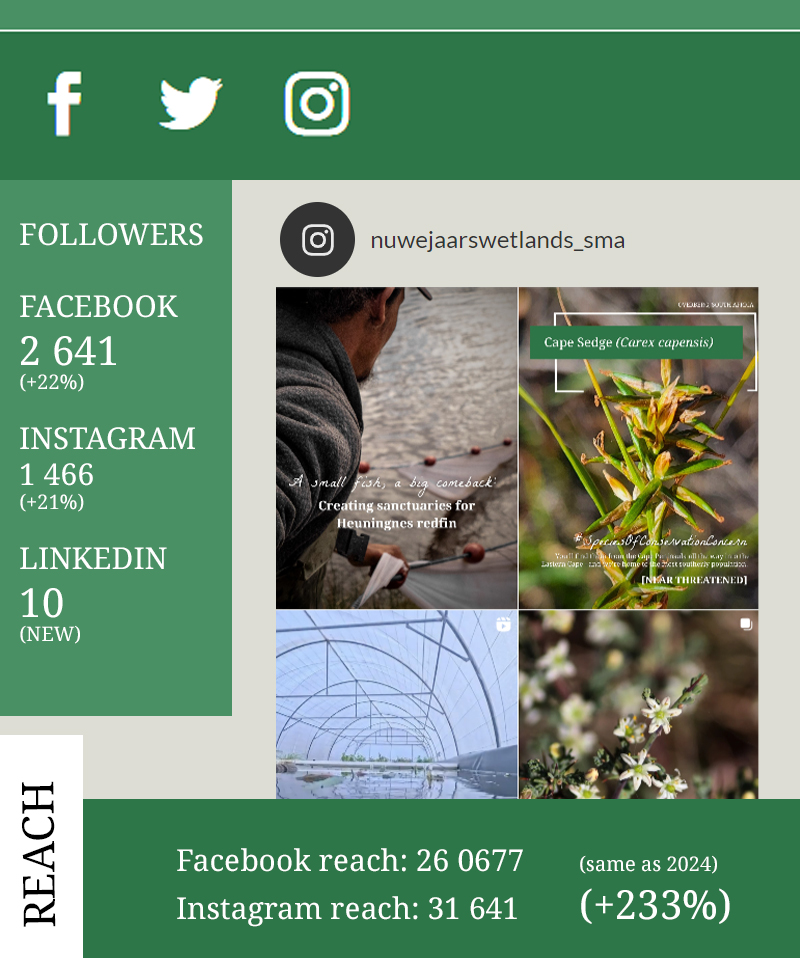
We enjoyed exposure in some wonderful media over the past year:
- Good Things Guy
- News24
- Hermanus Times
- Die Burger
- Village News
- Over de Berg
- The Newspaper
- Gansberg
- Cities With Nature Buzz
- Financial Times
- CapeNature
- SANBI
- Suidernuus
Be sure to follow us:
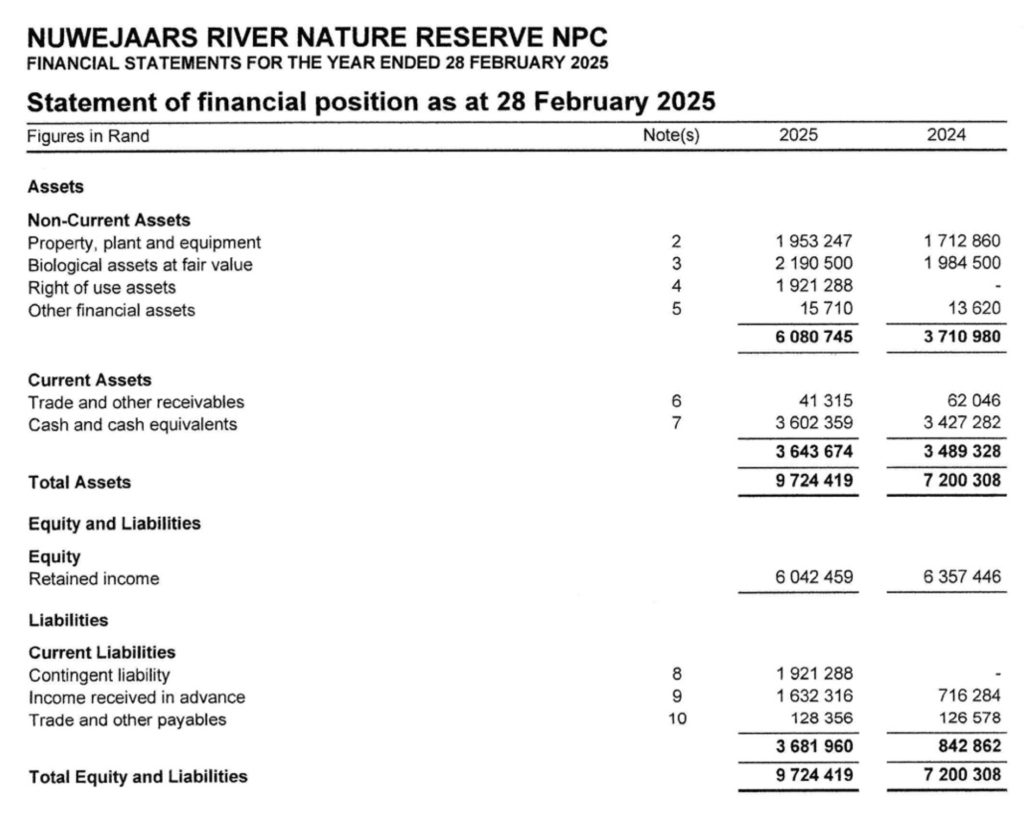
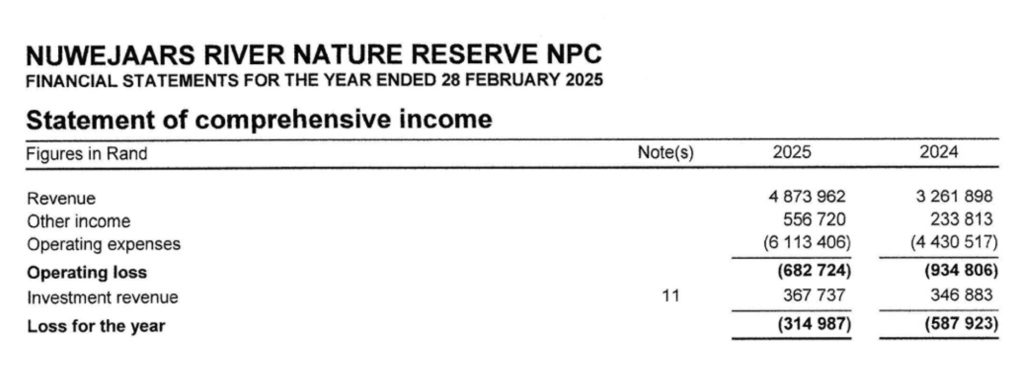
Financial statements for year ended
28 February 2025
The accompanying summary financial statements, which comprise the summary statement of comprehensive income and statement of financial position for the year ended 28 February 2025, were derived from the audited annual financial statements of the Nuwejaars River Nature Reserve NPC for the year then ended. We expressed a modified audit opinion on those annual financial statements which have been explained in the applicable audit report.
Management’s Responsibility for the Summary Annual Financial Statements
Management is responsible for the preparation of the summary of the audited annual financial statements.
Auditor’s Response
We have been requested to judge whether the summary financial statements are consistent with the audited annual financial statements. The summary financial statements were derived from the audited annual financial statements of the Nuwejaars River Nature Reserve NPC for the year ended 28 February 2025 by management and appear consistent.

BVA Overberg Incorporated
Registered Auditors
Statement of financial position as at 28 February 2025
Statement of comprehensive income for the year ended 28 February 2025
Donors and partners
We are incredibly grateful to our donors over the past year – many of whom have stood by us for years. We could not achieve what we do without your support, and we are deeply appreciative. Our sincere thanks also go to our conservation partners – together we can achieve so much more.



PAUL & WILNA PENTZ
Le Roux van Niekerk (tyres)
Con Neethling (drip torch)
Andre Brink (laminator)
Dirk Swart (gravel)