What does it take to keep a conservation landscape functioning, day after day?
IT TAKES PEOPLE.
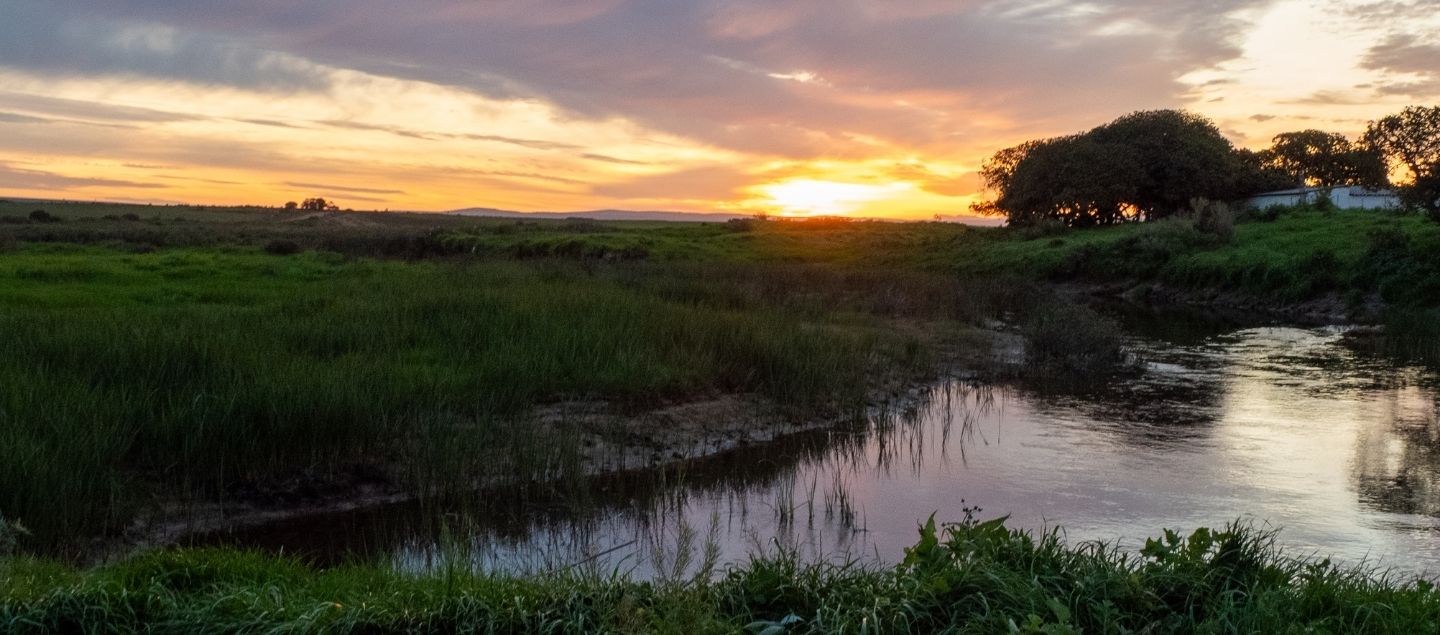
Across the Nuwejaars Wetlands SMA, much of the work happens behind-the-scenes. It’s driven by a hardworking, experienced team, with each member taking responsibility for the activities that drive conservation: from measuring the health of a river, checking a fence, preparing for an ecological burn or moving wildlife.
When these individual actions are seen collectively, they show what it takes to care for a 47 000-hectare conservation landscape.
Meet some of the people doing this work every day, with the support of the Hans Hoheisen Charitable Trust (HHCT).
Meet Denver Engel:
No two days ARE the same
As Ecosystem Services Team Leader, Denver Engel has one of those jobs that is difficult to sum up easily. His team helps manage wildlife, maintains fences and infrastructure, works with fire and responds to whatever else the landscape demands that day. That’s also exactly what Denver enjoys about it. “Every day offers something different.”
High on his list is working with the wildlife that has been reintroduced to this rewilded landscape, including buffalo, hippo and Rau quagga, which form part of the Quagga Project.
It’s physical and sometimes difficult work. Over the past year, Denver and his team have been involved in four major game capture and translocation operations involving buffalo and Rau quagga. Some animals have been moved between herds within the Nuwejaars Wetlands SMA, while others have left the landscape to establish new breeding groups elsewhere.
For Denver, it’s all part of the daily work of managing a rewilded landscape.
Meet Gurshwin Natal:
New skills open new doors
An investment in conservation can also be an investment in someone’s personal growth. Our team members received training and other support, which will not only benefit them during their working day, but also in other aspects of their lives. Three team members working for the NRNR – Gurshwin Natal, Hilton Olifant and Janus Malherbe – all obtained their driver’s licences.
For Gurshwin, driving is now an important part of his day-to-day. As our tractor driver, he has become particularly valuable during some of the team’s more challenging wildlife operations. “I drive the tractor and the vehicles. I take water to controlled burns and wildfires. And when we’re working with game and an animal is too heavy for us to move, I use the tractor.”
It’s a practical skill, but one that gives Gurshwin greater responsibility within the team and builds his own skills for the future.
Meet Sam Temmers:
Working with fire
Sam Temmers has worked alongside Denver for the past four years. Before joining the Nuwejaars team, he worked in construction, much of it in Elim, the town where he was born.
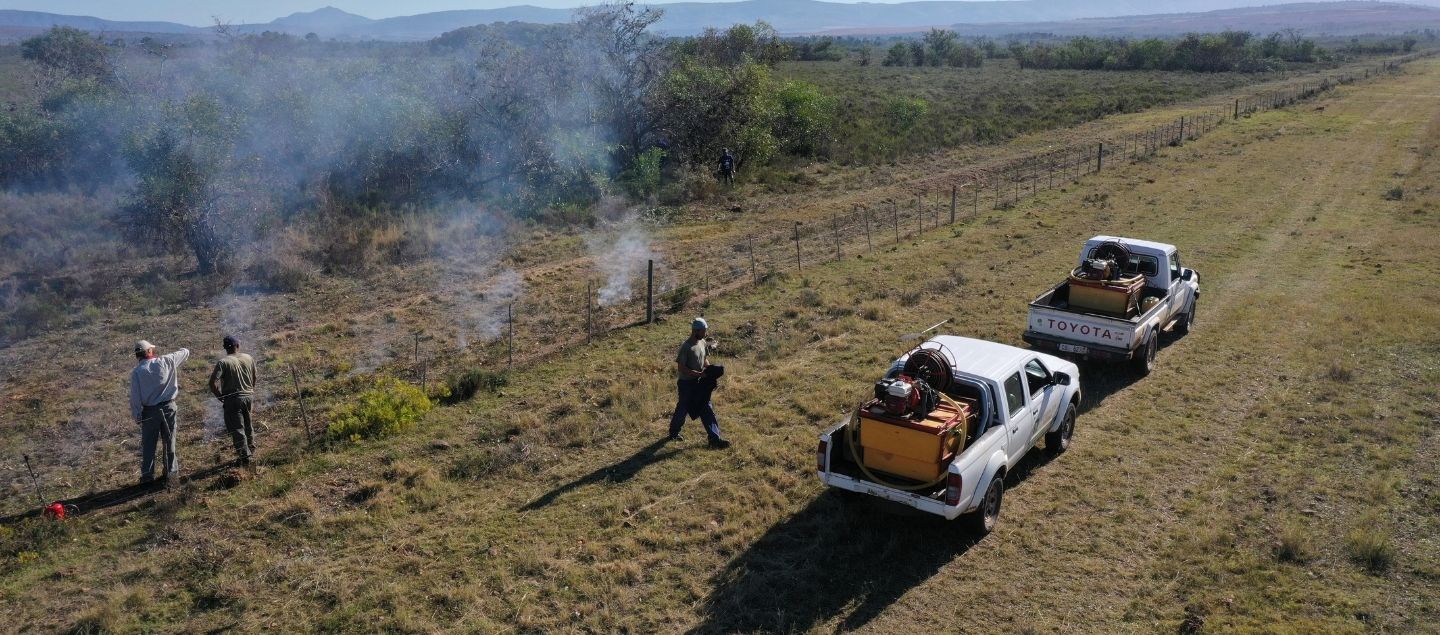
Today, part of his job involves something very different: fire. Fynbos needs fire to survive. In the past year, Sam and his fellow team members completed their fire-line safety training and fire refresher training, provided by the Greater Overberg Fire Protection Association. These training opportunities help not only upskill team members, but also provide them with the experience needed to undertake the day-to-day work.
For example, the team helped carry out a carefully planned ecological burn across 190 hectares of threatened fynbos. The veld had not burnt for more than 20 years and fire was needed to stimulate its next cycle of growth and renewal.
But working with fire also means being ready when the fire isn’t planned, and training is essential for our team to prepare them for these challenges. Sam and his colleagues have faced major wildfires, including the Pearly Beach fire, which raced across more than 25 kilometres in just three hours before reaching the Nuwejaars Wetlands SMA and burning into the wetlands. Those are the days when training, experience and teamwork really count.

Meet Breyton Murtz:
Reading the water
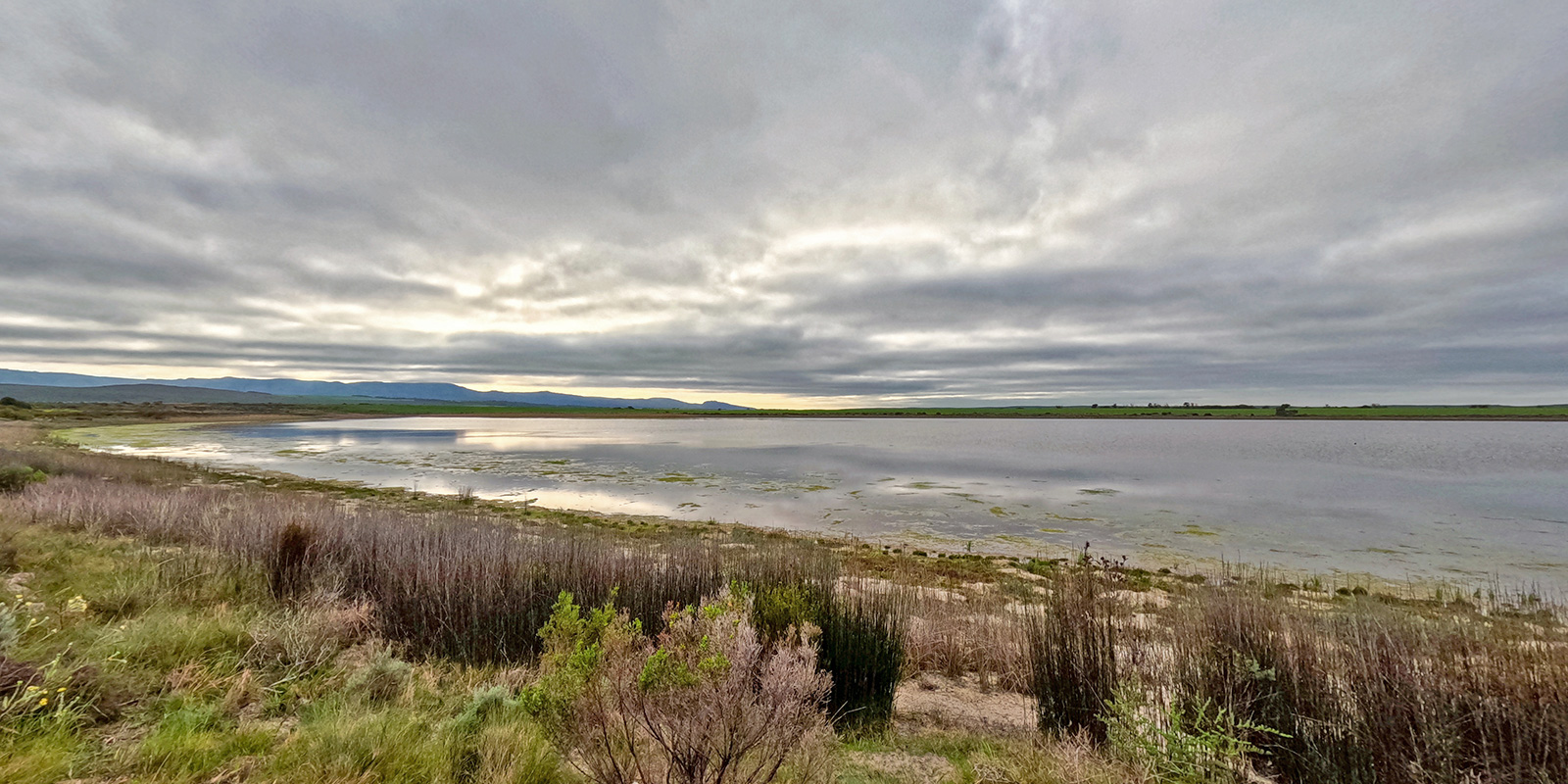
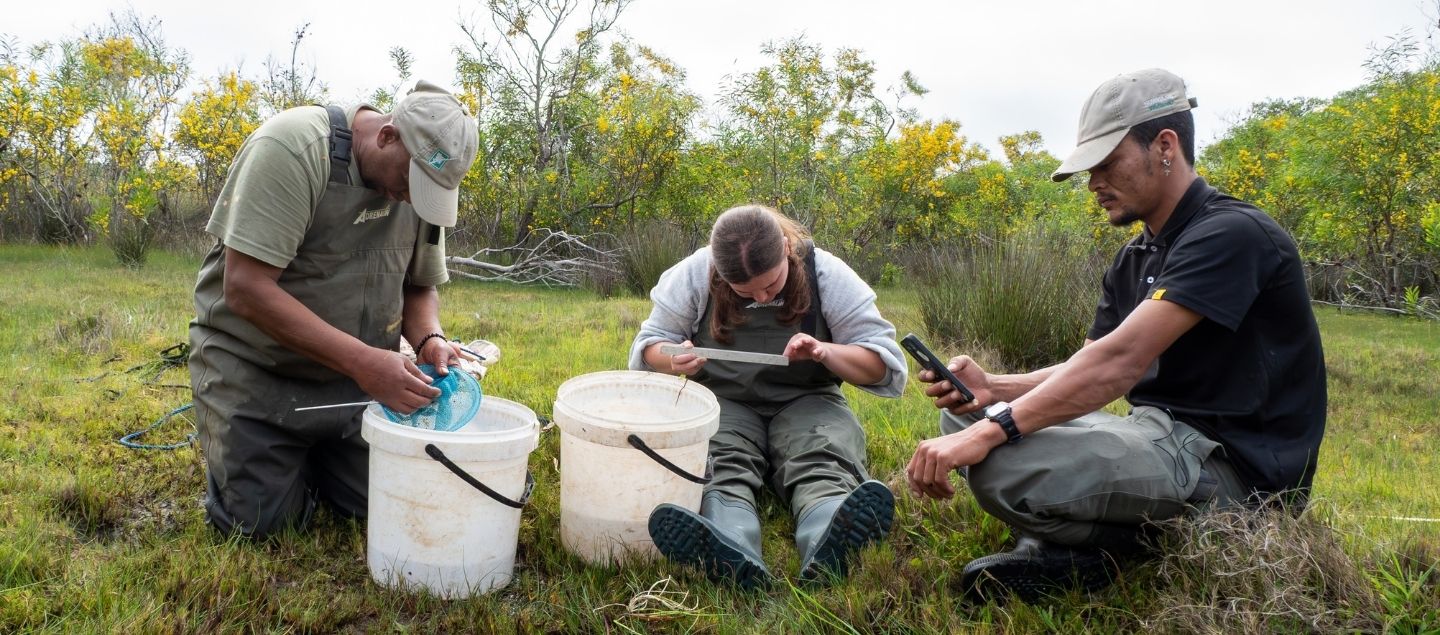
When Breyton Murtz heads into the wetlands, one of his jobs is to keep an eye on the water itself. Together with Deon Newman, Breyton regularly monitors water quality across the Nuwejaars River, its tributaries, wetlands and off-stream dams.
During the previous year, the ecological monitors surveyed 213 new and repeat sites, measuring dissolved oxygen, electrical conductivity and water temperature. This year, Breyton says, they’ve already visited even more.
“We’ve probably monitored more than 300 sites this year. The good news is that the results continue to show that the water quality in our rivers and wetlands falls within safe thresholds for freshwater. That’s an important sign that these systems remain healthy.
His work also takes him beneath the surface. Breyton helps monitor the indigenous freshwater fish living in these systems, while keeping watch for invasive alien fish that threaten them. These measurements add to our understanding of the health of this interconnected waterscape.
The people behind the landscape
These are just four people – and four glimpses into the work that happens across the Nuwejaars Wetlands SMA every day. Through its support, the Hans Hoheisen Charitable Trust helps the Nuwejaars River Nature Reserve support five permanent staff members and five Ecosystem Services team members.
But the value of that support is perhaps best understood through what those people make possible. As Conservation Manager Erica Brink says, “Conservation happens through people. We simply couldn’t do this work without the support of the Hans Hoheisen Charitable Trust – or without the dedicated team that turns that support into action across the landscape every day.”
To the Hans Hoheisen Charitable Trust: thank you for investing in the people who care for this landscape.